

Artemisia Gentileschi at the Museo degli Innocenti
In Florence until April 4, 2027, over 50 works and loans from major international museums and collections
Florence pays tribute to Artemisia Gentileschi with an exhibition that shines a spotlight on one of the most important chapters of her career: the years she spent in the Medici city between 1613 and 1620. Through April 4, 2027, the Museo degli Innocenti is hosting Artemisia Gentileschi in Florence, an exhibition that traces the painter’s artistic and personal journey through more than 50 works from over 40 Italian and international museums, foundations, and collections.
Curated by Cristina Acidini, Sandro Bellesi, and Costantino D’Orazio, the exhibition takes visitors on a journey through early 17th-century Florence, from the Medici court to artists’ workshops and the intellectual circles that contributed to Artemisia’s professional growth. It offers an opportunity to rediscover the talent of a woman who carved out a leading role for herself in a male-dominated art world.
 Artemisia Gentileschi al Museo degli Innocenti
Artemisia Gentileschi in Florence: her years at the Medici Court
When she arrived in Florence, Artemisia Gentileschi was in her early twenties. She left Rome behind, along with a legal case that had profoundly marked her life, to find new professional opportunities and a particularly vibrant cultural scene in Tuscany.
The city was enlivened by the court of Cosimo II de’ Medici, Cristina of Lorraine, and Maria Magdalena of Austria, as well as by a network of painters, writers, musicians, and important patrons. It was in this context that Artemisia developed a personal artistic language, engaging with the Florentine artistic tradition and the legacy of Caravaggio, whose painting had revolutionized the way reality was depicted through light, contrasts, and the direct observation of the human form.
Among the most significant commissions of this period were those for the Medici household and her work for the Buonarroti family. In 1615, Michelangelo Buonarroti the Younger commissioned her to paint the Allegory of Inclination, a work conceived to celebrate artistic vocation and natural talent.
Another pivotal moment came in 1616, when Artemisia was admitted to theAccademia delle Arti del Disegno in Florence, becoming one of the first women to join the prestigious institution. This recognition attests to the standing the painter had achieved through her skills and determination.
The exhibition at the Museo degli Innocenti: over 50 works to admire
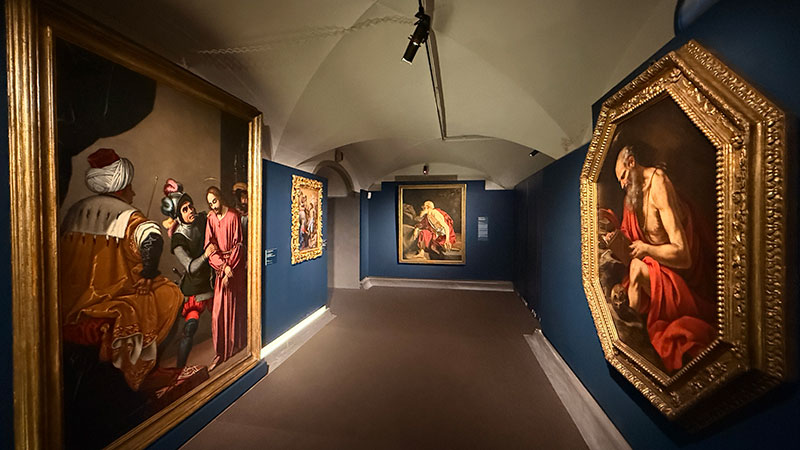
The exhibition brings together paintings that shed light on Artemisia’s artistic evolution and place her within the cultural context of her time. The artist’s works are juxtaposed with those of other leading figures in 17th-century painting, offering a glimpse into the influences, similarities, and differences that shaped the Italian art scene.
Among the loaned works are pieces from the Vatican Museums, the Uffizi Galleries, and Palazzo Pitti; the Capodimonte Museum; the Casa Buonarroti Foundation; Palazzo Madama in Turin; the National Art Gallery of Bologna; and the National Gallery of the Marche, as well as from major international collections.
Alongside Artemisia’s paintings are works by artists such as Cristofano Allori, Francesco Furini, Cesare Dandini, Giovanni Martinelli, Filippo Tarchiani, Ottavio Vannini, Lorenzo Lippi, Il Volterrano, and Jacopo Vignali. This comparison allows visitors to observe how Caravaggio-inspired dramatic intensity and naturalism intertwine with the elegance, rich color palette, and refinement of the Florentine tradition.
The Boy Peeling a Fruit by Caravaggio
Among the most eagerly anticipated works in the exhibition is the Boy Peeling a Fruit, also known as Mondafrutto, in the so-called Dickinson version, attributed to Caravaggio. Probably painted in the mid-1590s, the painting has been at the center of a long-standing art-historical debate. Shrouded in doubts about its attribution for centuries, the painting returned to the attention of scholars in 1996, when it was presented at a London auction as a workshop piece. On that occasion, art historian John T. Spike recognized it as a possible original by the master himself. The existence of numerous versions has fueled a critical debate that continues to this day. Its exhibition therefore represents a rare opportunity to observe up close a painting linked to one of the most fascinating questions in the history of Caravaggio’s art.
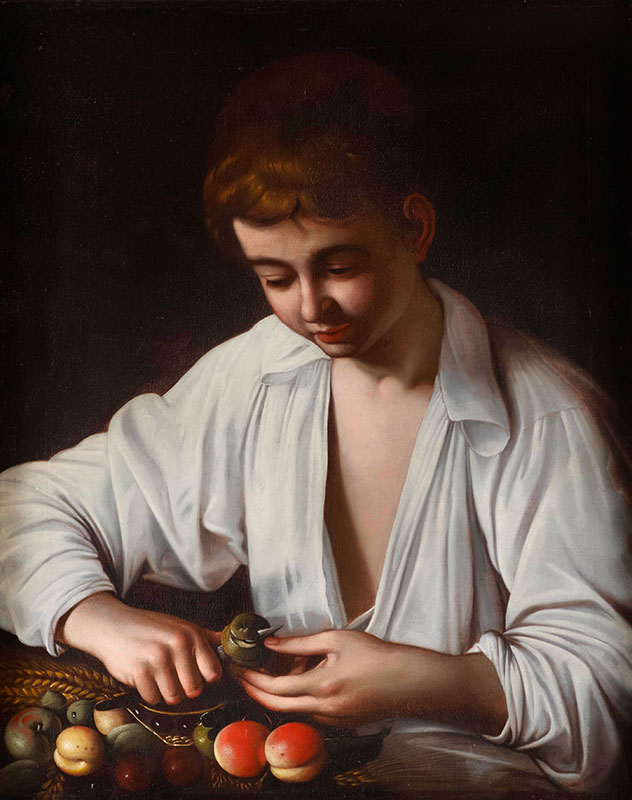 Michelangelo Merisi da Caravaggio Ragazzo che monda un frutto (anche detto Mondafrutto)
Judith with Her Maidservant: a rare work by Artemisia
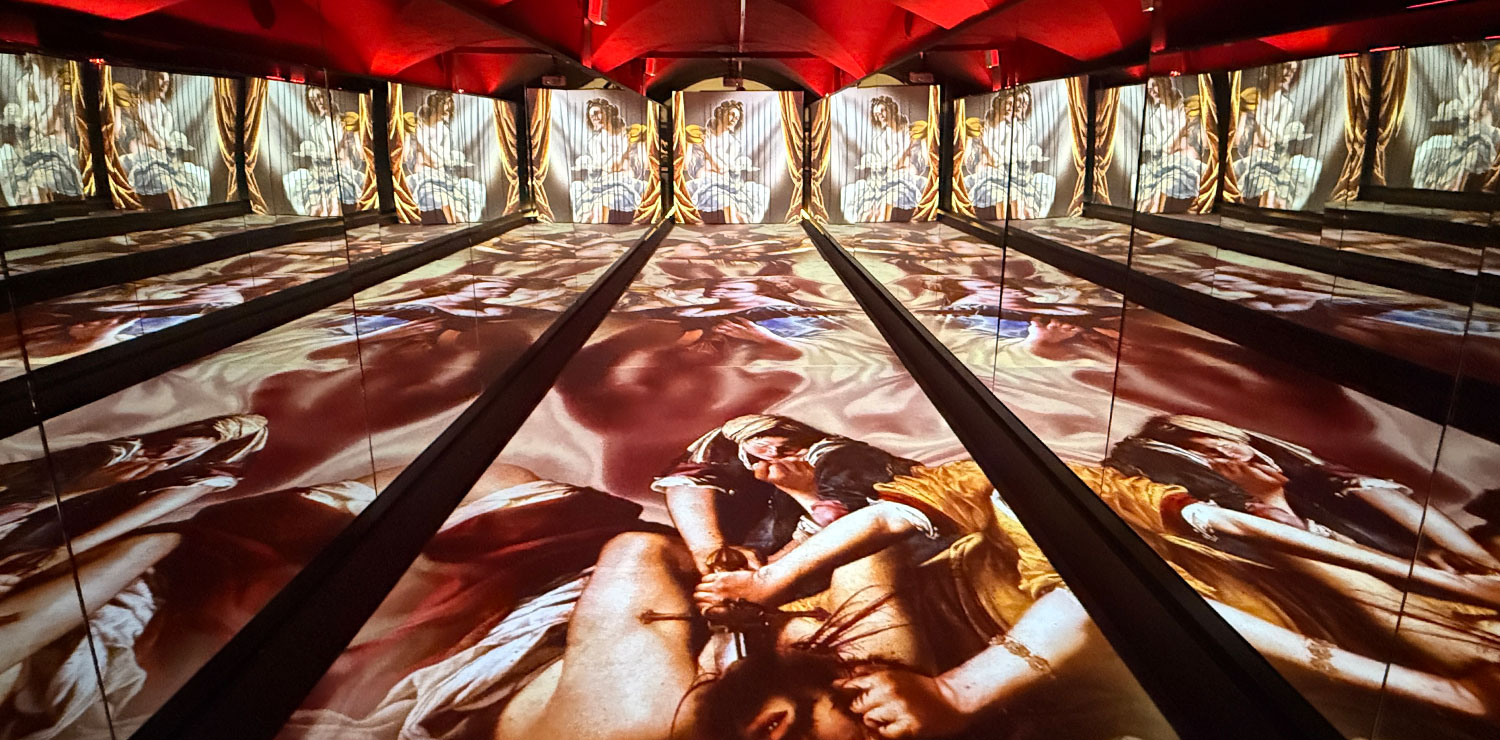
Another work of particular interest is an autograph version of Judith with Her Maidservant, dating from around 1610–1620 and rarely on public view. The painting, attributed to Caravaggio in the 1880 catalog of the Corsini Collection, was later identified as the work of Artemisia Gentileschi through the research of Roberto Longhi. The canvas dates from the artist’s Florentine years and is linked to the success of the composition on the same subject housed at the Pitti Palace. The scene is distinguished by its vertical composition, nocturnal lighting, and dramatic tension. References to Caravaggio’s painting intertwine with Artemisia’s personal sensibility, which transforms the biblical episode into an intense depiction, dominated by the strength of the protagonists.
Artemisia Gentileschi’s heroines: Judith, Mary Magdalene, and Cleopatra
One of the central themes of the exhibition is the depiction of female figures in 17th-century painting. Judith, Mary Magdalene, Cleopatra, and other protagonists of sacred history and mythology become subjects through which artists explore courage, sensuality, pain, and the capacity for action. Artemisia tackles these themes with a distinctive style. Her protagonists are not merely decorative or symbolic figures, but women with a strong physical and emotional presence, capable of commanding the scene with decisive gestures, intense gazes, and remarkable self-awareness. A comparison with the paintings of other artists allows us to appreciate the differences in the interpretation of the same subjects. Artemisia’s Judith, for example, emphasizes action and physical exertion, while other versions prevalent in Florence at the time placed greater emphasis on the heroine’s elegance and symbolic significance. The painter’s sensitivity is also evident in her depictions of Mary Magdalene. Her figures, though immersed in scenes of meditation or repentance, retain a strong sense of individuality: the richness of their garments, the solidity of their bodies, and the intensity of their expressions all contribute to portraying women with complex personalities.
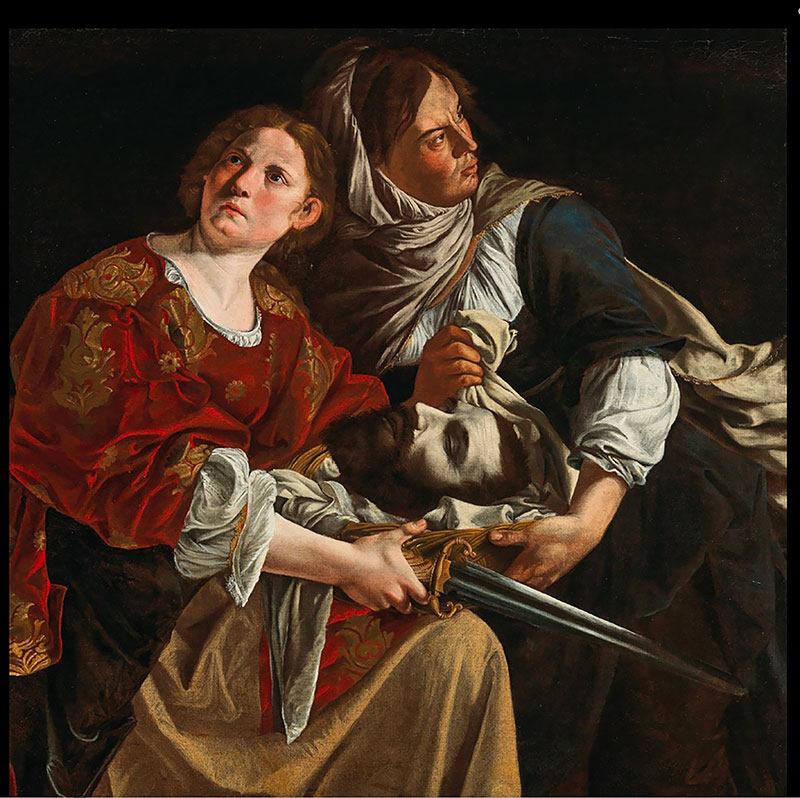 Artemisia Gentileschi Giuditta e l’ancella con la testa di Oloferne (©Fondazione Cassa di Risparmio di Terni e Narni, Collezione d’Arte)
The Allegory of Inclination: Artemisia’s Masterpiece at Casa Buonarroti
One of the most significant moments of Artemisia Gentileschi’s stay in Florence was the creation of the Allegory of Inclination, commissioned in 1615 by Michelangelo Buonarroti the Younger for Casa Buonarroti. The work depicts a young woman holding a compass and with a star above her forehead—symbols of vocation and the ability to chart one’s own course. The painting was part of a broader decorative program dedicated to the moral and intellectual qualities of Michelangelo Buonarroti, alongside other personifications created by various artists. The canvas, normally hung on the ceiling of one of the halls at Casa Buonarroti, is on display for this exhibition under exceptional circumstances, following its recent restoration, which has restored it to its original brilliance.
TheAllegory of Inclination also offers an opportunity to explore the relationship between Artemisia and her Florentine patrons. The fee she received—higher than that paid to the other painters commissioned to depict the Virtues—attests to the value attributed to her work.
From Florence to Naples and London: Artemisia’s International Career
The exhibition does not limit itself to recounting the Florentine period, but places this phase within the broader context of Artemisia Gentileschi’s artistic career.
After leaving Florence in 1620, the painter returned to Rome, where she continued to work for collectors and patrons. In 1630, she moved to Naples, one of the leading European artistic centers of the time, where she opened a studio and received major commissions from aristocrats, religious institutions, and circles associated with the Spanish court. Her fame even reached England: in 1638, Artemisia traveled to London at the invitation of King Charles I, where she was reunited with her father, Orazio Gentileschi, a court painter. After her father’s death, she returned to Naples, where she continued her work.
In her mature works, her painting evolved toward more complex compositions, in which the figures interact through gestures, glances, and movements. Paintings such as Samson and Delilah, Judith and Her Maidservant with the Head of Holofernes, and the late Susanna and the Elders demonstrate an increasingly complex narrative approach.
Following this journey means recognizing Artemisia not only as one of the most important artists of her time, but as a professional capable of building an international career, running a workshop, and holding her own among the great masters of the seventeenth century.