text Francesca Lombardi



Broken. The Power of the Fragment in Florence
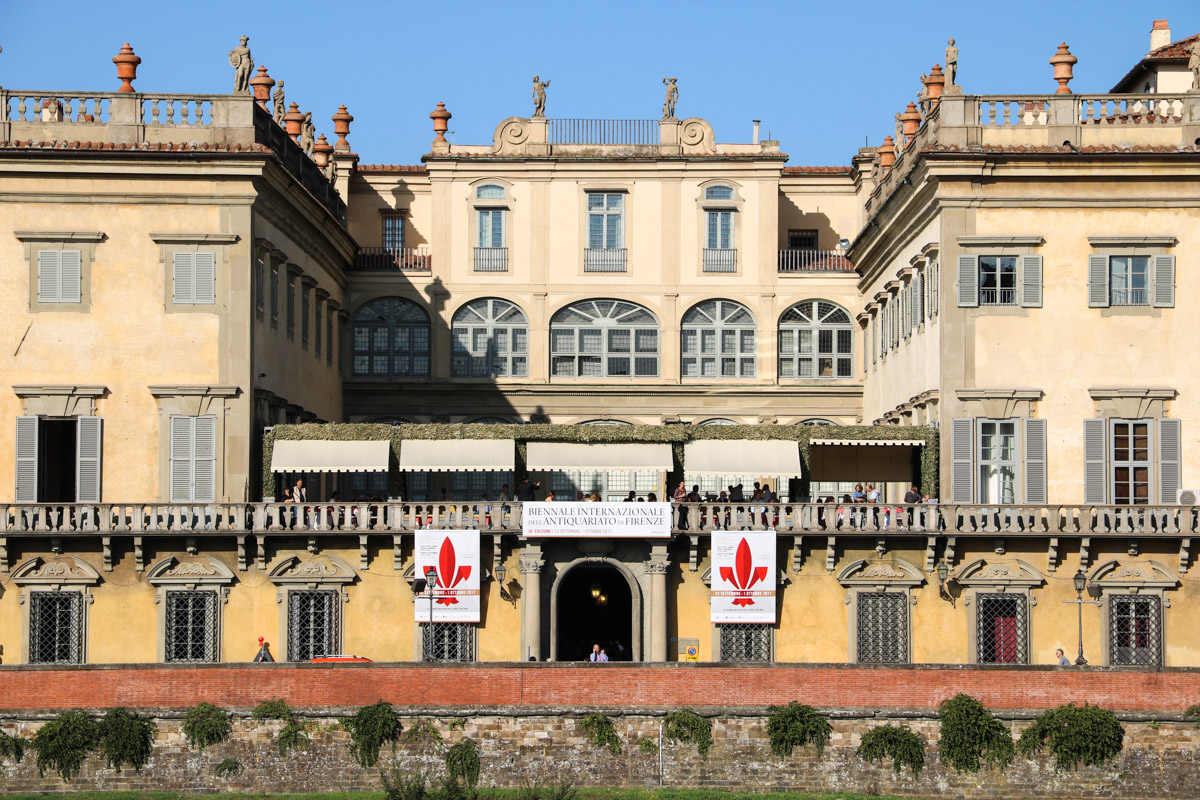
From September 25 to January 24, 2027, Palazzo Strozzi will host a major exhibition dedicated to the significance of fragmentation in the history of sculpture
Can a part contain the power of the whole? This is the question that serves as the starting point for Broken. The Power of the Fragment, the major exhibition with which Palazzo Strozzi explores one of the most fascinating and enduring themes in the history of sculpture from September 25, 2026, to January 24, 2027. From archaeology to contemporary art, the exhibition invites visitors to observe what is broken, mutilated, or incomplete, freeing it from the notion of loss:the fragment is not merely what remains of an original work, but an autonomous presence, capable of preserving time, memory, and the transformations of matter.
 Broken. La forza del frammento
Organized by the Palazzo Strozzi Foundation in collaboration with the National Gallery of Art in Washington, the exhibition brings together over eighty works and artifacts from some of the world’s most important museums, including the Metropolitan Museum of Art in New York, the Louvre in Paris, the British Museum in London, and the Museo Nacional de Antropología in Mexico City. An extraordinary collection in terms of its chronological and geographical scope, it brings into dialogue ancient Egypt and classical Greece, Michelangelo and Rodin, the legacies of premodern civilizations, and the explorations of some of the most significant artists of our time.Fragmentation can be the result of the passage of centuries, natural events, wars, dispersal, acts of iconoclasm, or cultural shifts. But it can also arise from a deliberate act: that of the artist who chooses to interrupt, isolate, or deconstruct form. The exhibition navigates this fine line, exploring the boundary between destruction and creation, ruin and rebirth. The fragment bears witness to a wound, yet it also possesses the freedom to take on unexpected identities, entering new contexts and opening itself up to ever-changing interpretations.
 Broken. The Power of the Fragment
The ancient works show how the unfinished and the partial have fueled the artistic imagination for centuries. An anatomical detail, an unfinished figure, or a surface still marked by the process of creation can express a tension even greater than that of a perfectly finished work. It is precisely in the interruption, in the space left open, that the viewer is called upon to intervene with their own sensibility, mentally reconstructing a form or accepting its irreducible incompleteness.
The dialogue with the present makes the relevance of the theme even more evident; artists adopt the fragment as a poetic principle and a tool for reflection on identity, the body, history, and the mechanisms through which we construct memory. In their works, the part does not necessarily refer to an original whole: it can become a new beginning, a language through which to address individual and collective traumas, cultural legacies, migrations, and social transformations.From Giovanni Pisano to Michelangelo and Canova, up to the most radical explorations of contemporary artists such as Vezzoli and Bourgeois, the exhibition brings together works that are distant in terms of era and origin, highlighting the vitality of the fragment.
Discover the exhibition itinerary with us
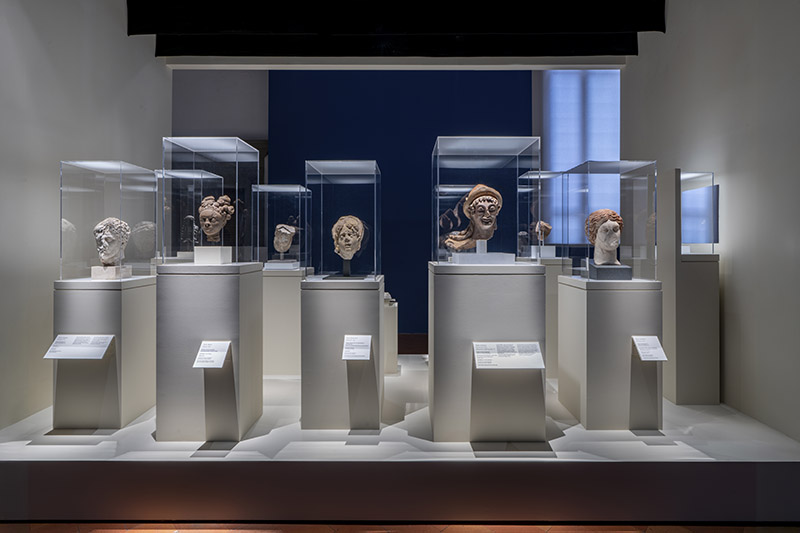
Room 1: Faces
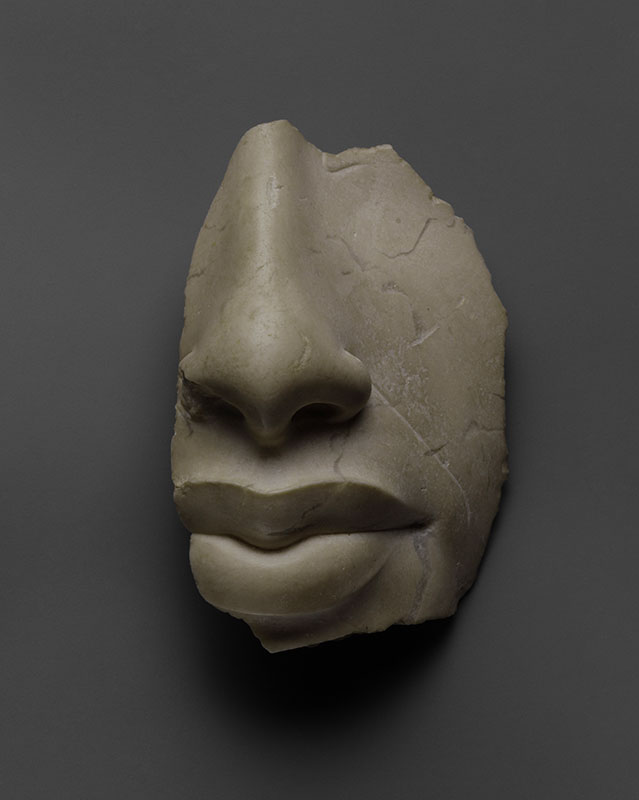
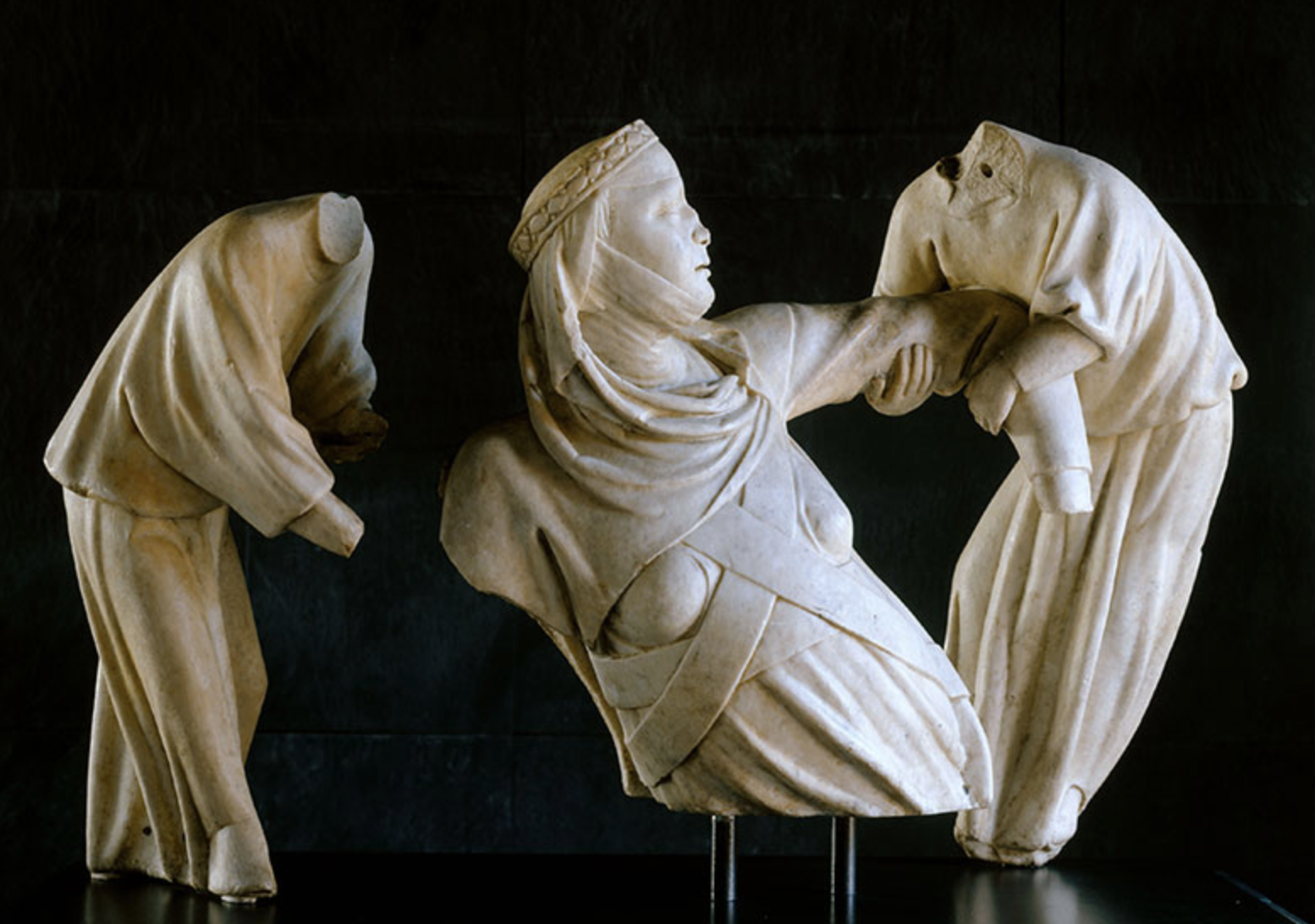
The journey begins with the face, the most recognizable and intense part of the human figure. In the fragments of Giovanni Pisano’s Funeral Monument to Margaret of Brabant, the break seems almost to accentuate the power of the expressions, focusing the gaze on what time has allowed to emerge. Alongside these, Akhenaten’s Nose and Lipsreduces the face to a few essential features—yet enough to still evoke a presence. And in the Head of a Goddess from Herodes Atticus’s Odeon, the oxidation of the bronze eyelashes cascades down the cheeks like a tear: a flaw in the material transformed by time into emotion.
 ©photo Ela Bialkowska OKNO studio
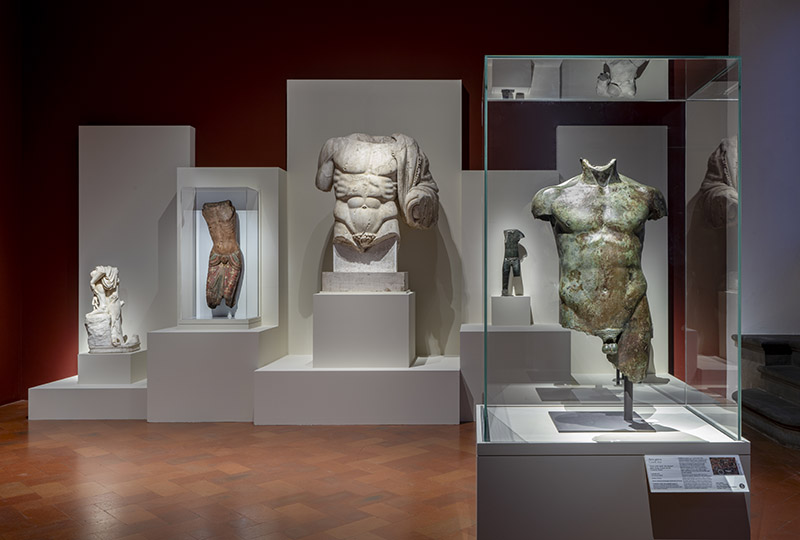
Room 2: Bodies
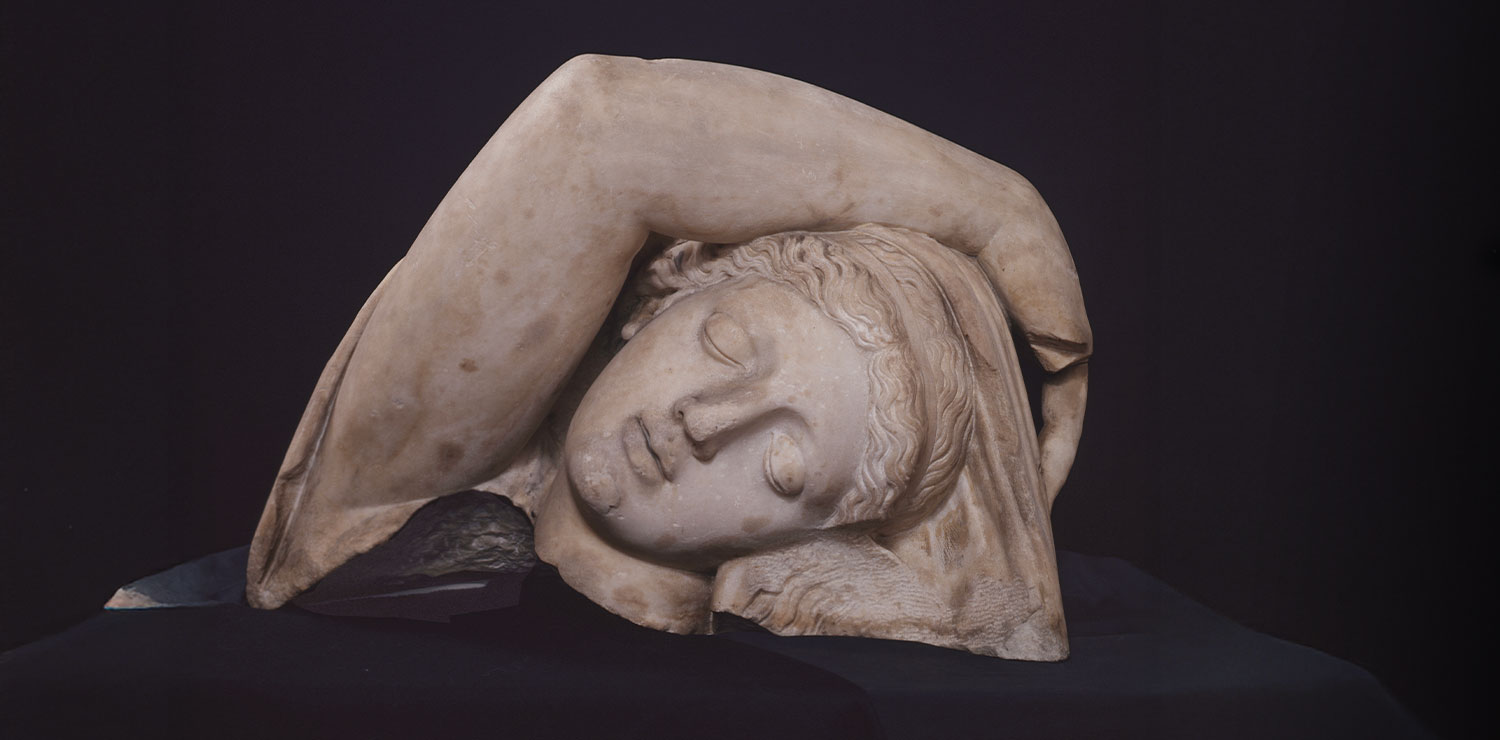
The second section shows how an incomplete body can preserve gesture, movement, and sensuality intact. In the Fragment of Hermes Tying His Sandal, the body still seems on the verge of moving, while the Torso of Christ from a Deposition from the Cross tells a surprising story: found in a field in France, it was even used as a scarecrow. Two vastly different works that demonstrate just how much a fragment can transcend different eras, functions, and meanings.
 ©photo Ela Bialkowska OKNO studio
Room 3: Iconoclasm
Here, the fracture is intentional. Destroying a statue often means striking at the authority it represents. The fragments attributed to the equestrian statue of Demetrius I Poliorcetes introduce a millennia-long history of monuments torn down to symbolically erase their power. The Head of a Magus King from Notre-Dame, removed during the French Revolution and later reused in the foundations of a building, makes it even clearer how a sculpture can become a tangible witness to the conflicts of history.
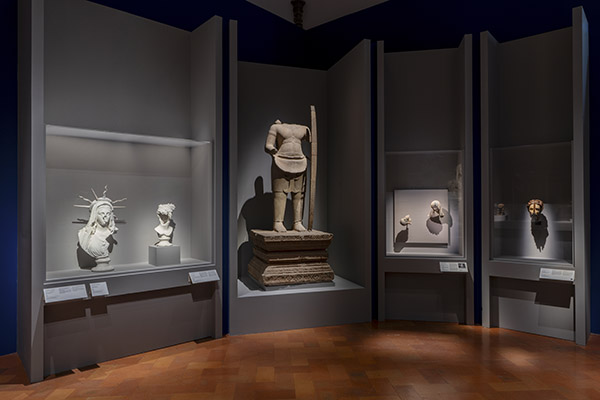
Room 4: War and Colonialism
Here, wounds become direct traces of history. The plaster heads by Antonio Canova, still bearing the marks of the artillery fire that struck Possagno during World War I, preserve the memory of the conflict on their surfaces. The Buddha Head from Borobudur, on the other hand, leads the visitor toward the theme of colonialism and the dispersion of artworks, prompting a highly topical reflection on the relationship between museums, provenance, and restitution.
 ©photo Ela Bialkowska OKNO studio
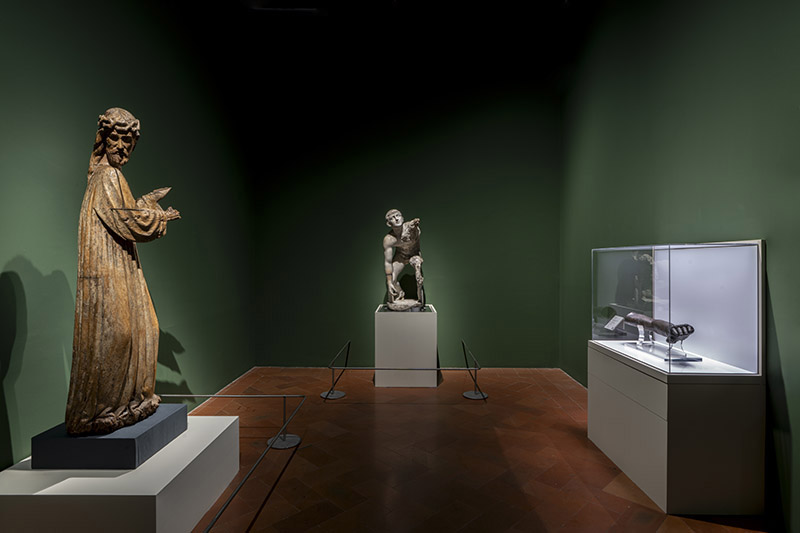
Room 5: Nature
It is not always humans who transform a work of art. The sea, floods, volcanic eruptions, and the passage of time also shape the material. In the Crouching Boy from the Antikythera Wreck, the surface of the marble bears witness to nearly two thousand years spent underwater: some parts have been preserved, while others have been severely eroded. The Christ Carrying the Cross, marked by the 1966 Florence flood, shows how a disaster can become part of the work’s very history and an integral part of its identity.
 ©photo Ela Bialkowska OKNO studio
Room 6: The Recomposed Body
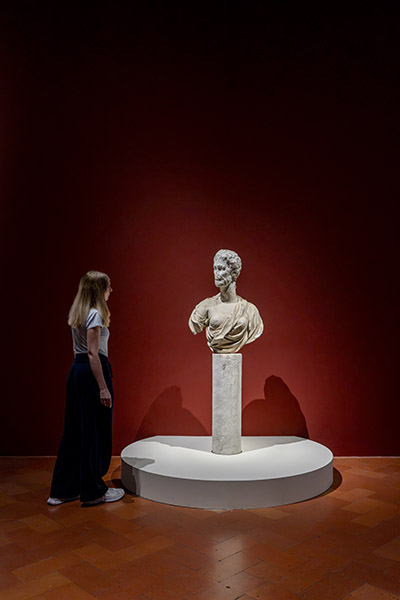
At this point, the exhibition shifts perspective: the fragment is no longer merely what remains, but material from which to begin anew. The Statuette of a Young African Woman, created by combining a Hellenistic head with a body made centuries later, illustrates an ancient practice of reconstruction and reinvention. With The Swan by Francesco Vezzoli, this same logic becomes fully contemporary: ancient fragments are reassembled into a new figure, free from a singular notion of identity.
 ©photo Ela Bialkowska OKNO studio
Room 7: Danh Vo
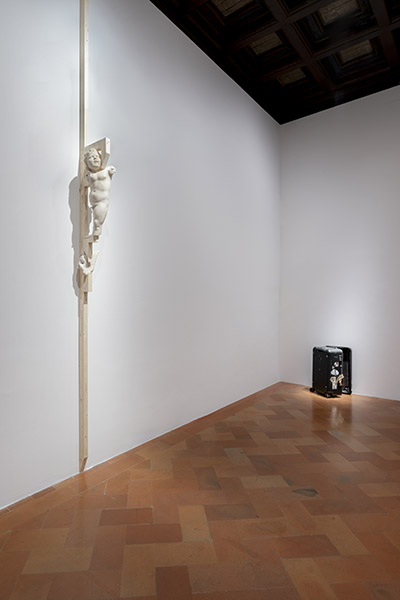
The room dedicated to Danh Vo is one of the most evocative in the exhibition. In his meat cables, fragments of ancient sculptures are juxtaposed with contemporary materials, such as lumber and even a Rimowa suitcase. The juxtaposition is elegant and unsettling: it speaks to travel, collecting, migration, and displacement, but also to how every identity can be constructed through diverse stories.
 ©photo Ela Bialkowska OKNO studio
Room 8: Sculpting the Fragment
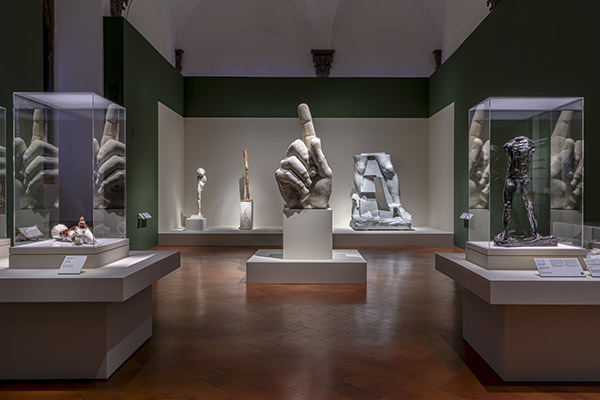
Here, incompleteness becomes an aesthetic choice. The monumental Right Hand of a Colossal Statue Traditionally Associated with Constantine demonstrates how a single body part can become an autonomous form, capable of asserting itself in space. It is also the point where the dialogue with Michelangelo and the power of the unfinished—extending all the way to Rodin’s legacy—emerges most clearly. In *Foot* by Louise Bourgeois, the fragment takes on an intimate and biographical significance, linked to memory and mourning.
Room 9: The Contemporary Body
In the 20th century, the fragmented body became a powerful language for addressing vulnerability, desire, and death. In *Untitled (Meat Cable)* by Paul Thek, wax forms resembling shreds of meat oscillate between relic, organic matter, and sacred object. In Robert Gober’s *Untitled*, an isolated leg paired with a candle creates a suspended image—at once familiar and unsettling—haunted by the memory of the AIDS crisis.
 ©photo Ela Bialkowska OKNO studio
Room 10: Paul Pfeiffer
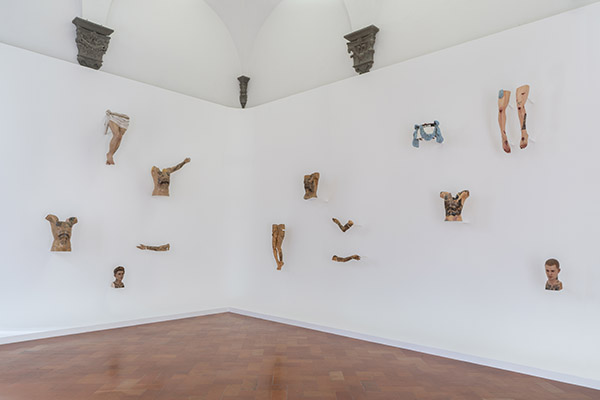
The exhibition concludes with a reflection on the present. In the series Incarnator, Paul Pfeiffer commissions various sculptors to create—separately—the head, arms, legs, and torso of Justin Bieber, using techniques rooted in the tradition of religious statuary. The body will never be reassembled: each fragment exists on its own, like a sort of contemporary relic. It is an effective conclusion because it subverts the meaning of the entire exhibition: here, fragmentation is not what remains after a loss, but the starting point of the work.
 ©photo Ela Bialkowska OKNO studio
Expanding on the project is a new installation by the Dutch-Belgian artist Mark Manders, conceived specifically for the Renaissance Courtyard of Palazzo Strozzi. Its presence introduces the theme of fragmentation into the very heart of the architecture, creating a contrast between the composure of the historic space and a sculpture that seems to come from a suspended time at once ancient and contemporary.
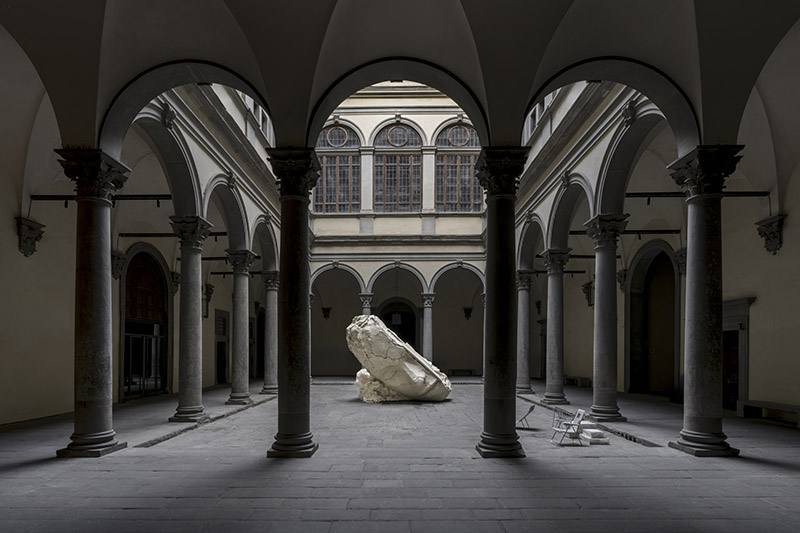 ©photo Ela Bialkowska OKNO studio
Curated by C. D. Dickerson and Andrew Sears of the National Gallery of Art, in collaboration with Arturo Galansino, general director of the Fondazione Palazzo Strozzi, Broken thus constructs an alternative history of sculpture to one based on integrity and perfection. What emerges is the power of what endures: works that have lost a part of themselves, but precisely because of this continue to transform before our eyes. The fragment thus becomes not the conclusion of a story, but rather the point from which another can begin.