PHOTO Foto Locchi/©Archivio Foto Locchi


4 November in Florence: everything you need to know about the Florence Flood
Photos from the Archivio Foto Locchi, the legacy of the Angels of the Mud, and the story of how the relationship between the city and its river has changed
Florence still remembers the sound of the water—even sixty years later. Not the tranquil sound of the Arno that all tourists long to admire at sunset from Piazzale Michelangelo—as it flows along the banks, reflecting bridges and facades bathed in the golden light of the setting sun—but the ominous roar of a city suddenly transformed into a river.
On November 4, 1966, water poured into homes, shops, churches, and museums. It swept away mud, oil, cars, books, and fragments of lives. And it left a wound that, over time, has become part of the city’s collective memory.
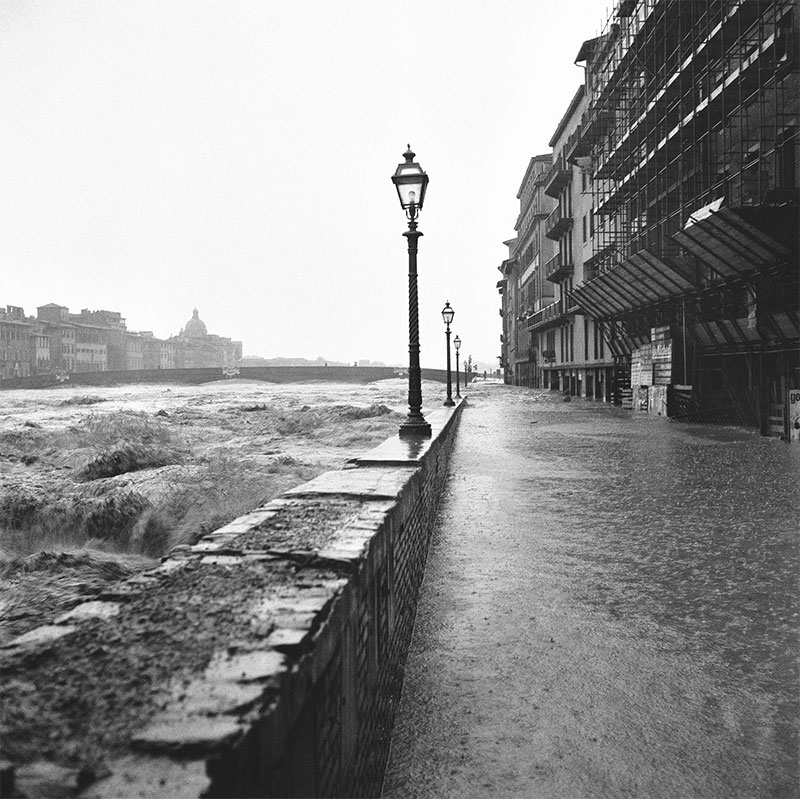 Alluvione ©Archivio Foto Locchi
What happened on November 4, 1966: the flood that submerged Florence
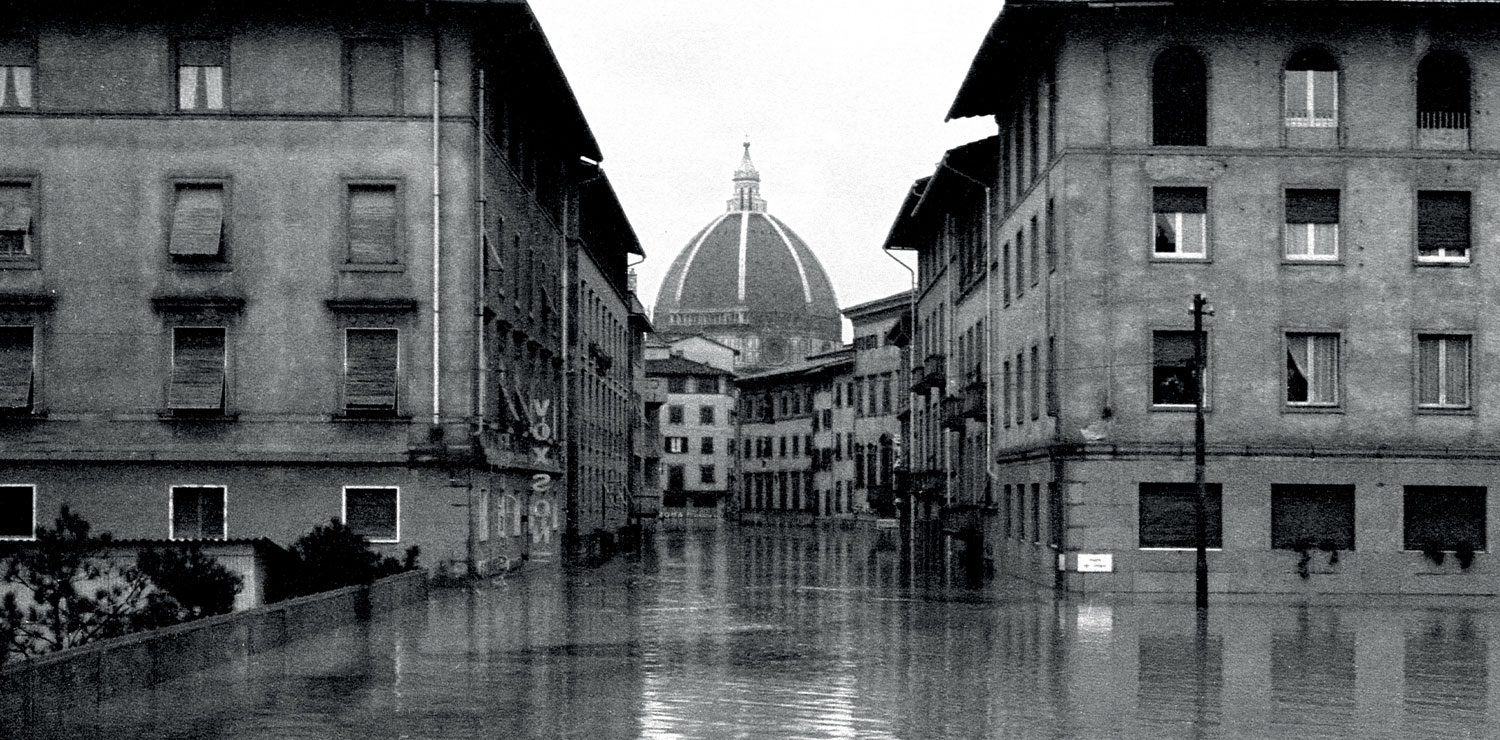
It had been raining for days and the Arno was in flood, but the city didn’t really feel in danger. It was a national holiday; schools and offices were closed, and no warning had prepared Florence for what was about to happen. Shortly after dawn, the river burst its banks and flooded the city center: Santa Croce, the riverbanks, Santo Spirito, and Piazza del Duomo. Within a few hours, the streets turned into torrents, cars floated like wrecks, and families took refuge on upper floors, without electricity or phone service.
There were 35 fatalities. There is a recording that captures the atmosphere of that morning better than any photograph. RAI journalist Marcello Giannini held his microphone out the window. “I don’t know if you can hear this noise.” Then he explained: “This isn’t a river—it’s Via Cerretani.” These words alone suffice to convey the absurdity of those hours: the heart of Florence was no longer a street.
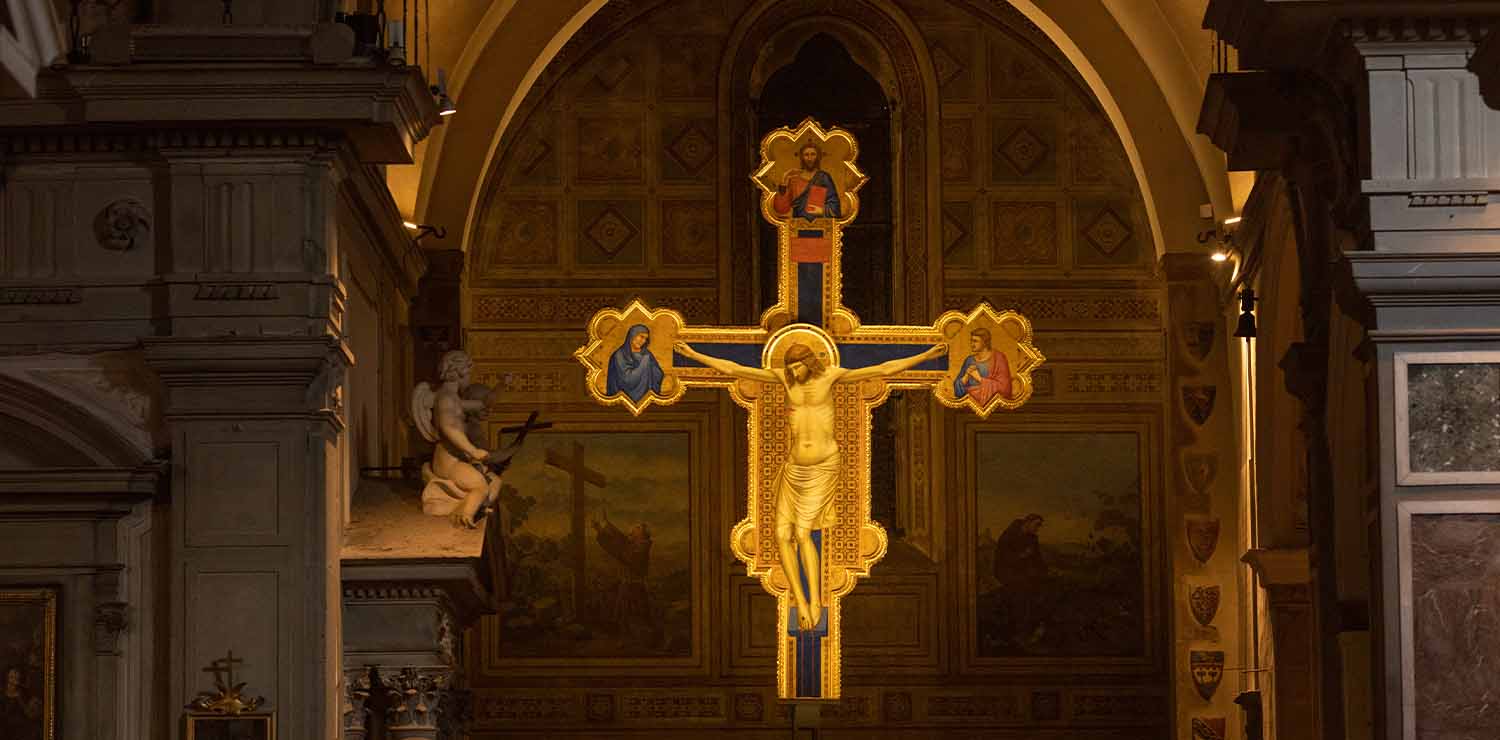
The water did not even spare what seemed eternal. It penetrated the Uffizi, threatened the Vasari Corridor, reached Piazza del Duomo, and violently forced open the Gate of Paradise of the Baptistery. At the National Central Library, more than a million volumes were submerged. At Santa Croce, Cimabue’s Crucifix remained submerged in water, mud, and fuel oil until it lost much of its painted surface. From that moment on, it became the flood’s most recognizable “wound” and, at the same time, the symbol of its resurrection.
The following morning, the river had returned to its bed. What remained was silence and the acrid smell of mud. The Florentines began shoveling. First to clear a front door, then a shop, a cellar, a library. Here, the narrative of the flood shifts in tone: from tragedy, it becomes a collective story.
Who were the angels of the mud: volunteers who came from all over the world
Starting on November 6, young people began arriving from all over Italy and then from every corner of the world. Driven in part by television footage and the documentary directed by Franco Zeffirelli—narrated in Italian by British actor Richard Burton and produced to commemorate the immense tragedy of the Florence flood—the entire world rallied in an incredible wave of solidarity.
They showed up with boots, shovels, and bare hands. These young people were called the Angels of the Mud—a term coined by journalist Giovanni Grazzini—and they worked for weeks in libraries, churches, museums, and private homes.
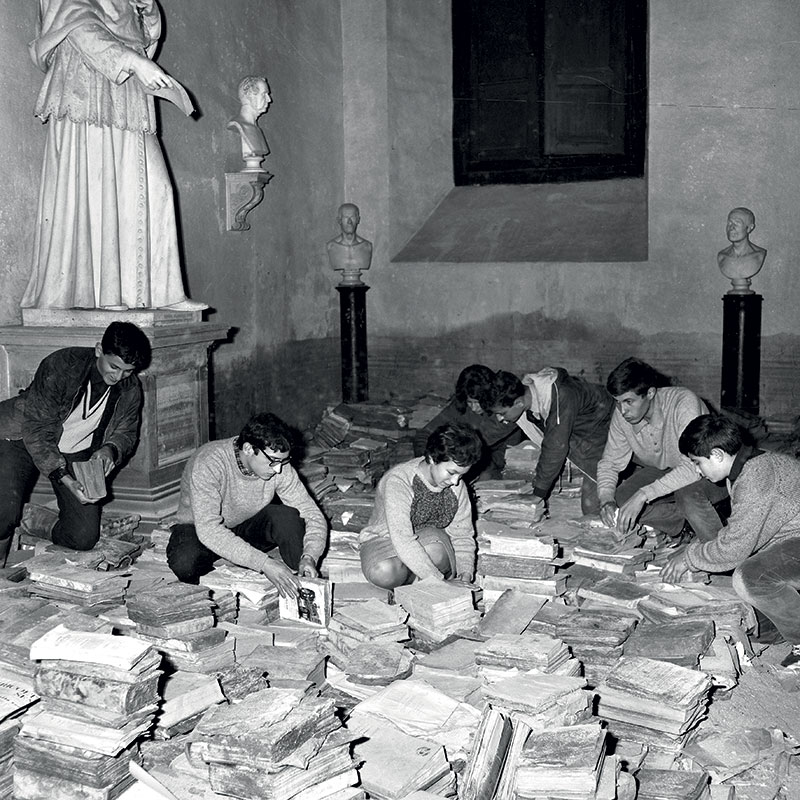 Alluvione ©Archivio Foto Locchi
At the National Library, waterlogged books were passed from hand to hand; elsewhere, they salvaged paintings, frames, photographs, and letters. Florence, after all, is a city of angels—in its frescoes, its paintings, its concept of beauty, as well as in the spirituality and depth of many of the works it houses. Among them were young and old alike who would later become famous (some already were): from Ted Kennedy to Joan Baez, from Margherita Hack to Sergio Staino, from Antonello Venditti to Francesco De Gregori.
The birth of modern conservation
Florence’s response also changed the way art was protected. Under the leadership of Ugo Procacci and thanks to the work of conservators, technicians, and volunteers, emergency workshops were set up and new procedures were developed. The panel paintings were taken to the Limonaia in Boboli to prevent them from drying out too quickly; the Forte Belvedere housed the books; and Palazzo Davanzati housed the sculptures and applied arts. The restoration of Cimabue’s Crucifix led to the development of new solutions, including “chromatic abstraction.” The catastrophe thus also became a conservation laboratory, destined to set a precedent.
The Florence Flood told through images from the Archivio Foto Locchi Locchi
Sixty years later, the photographs from the Archivio Foto Locchi serve as a valuable record for reconstructing those days. Black-and-white images document the ferocity of the flood, the submerged streets, the monuments surrounded by water, and the tireless efforts of those who immediately sprang into action to help the city. This photographic legacy offers a close-up view not only of the scale of the catastrophe but also of the strength of the community and its ability to respond to one of the greatest emergencies in Italian history.
It is no coincidence that the photographic narrative of 20th-century Florence was the focus of the major exhibition Florence ’50 ’60 ’70. Images from the Archivio Foto Locchi, held at Villa Bardini from May 7 to October 18, 2026, and greatly appreciated by all Florentines. Through approximately 150 photographs, the exhibition traced three pivotal decades for the city, from the years of the economic boom to the tragedy of the 1966 flood, and on to the social and cultural changes of the 1970s.
 Mostra Archivio Foto Locchi a Villa Bardini (Foto Locchi/©Archivio Foto Locchi)
An exhibition that, during the year marking the 60th anniversary, has brought back into the spotlight the memory of a Florence that was able to rise again, thanks in part to the help of thousands of people.
Florence, 60 years later: a memory that will never be forgotten
Sixty years after the flood, November 4, 1966, remains a date etched in the memory of Florence. A deep wound that forever changed the city’s relationship with its river and with the preservation of its historical and artistic heritage. But it is also a reminder of boundless solidarity—of a generation of young people who came from far away to help a city they had perhaps never seen before and that, from that moment on, they would carry in their hearts forever.
The “Angels of the Mud” did not merely save books, works of art, and monuments: they helped preserve the history of Florence and pass it on to future generations. Because November 4, 1966, is not just the memory of a tragedy. It is also the story of a city that did not give up and of an entire world that rallied to save it.
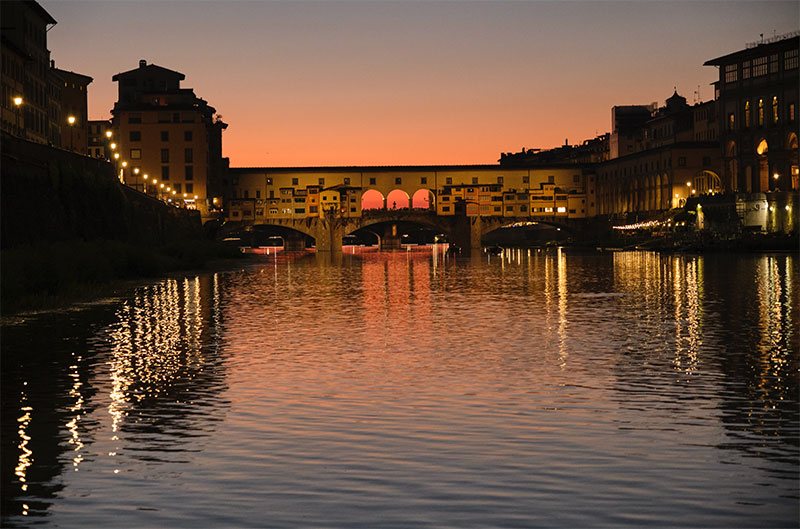 Ponte Vecchio
Today, the Arno remains a force to be respected and monitored, especially during heavy rains and floods, but it is also a space to be enjoyed and explored through a variety of outdoor activities. It offers a different way to experience Florence, one that also reflects the evolution of the relationship between the city and its river: from the setting of one of the greatest tragedies in its history to a place for sports, discovery, and socializing.