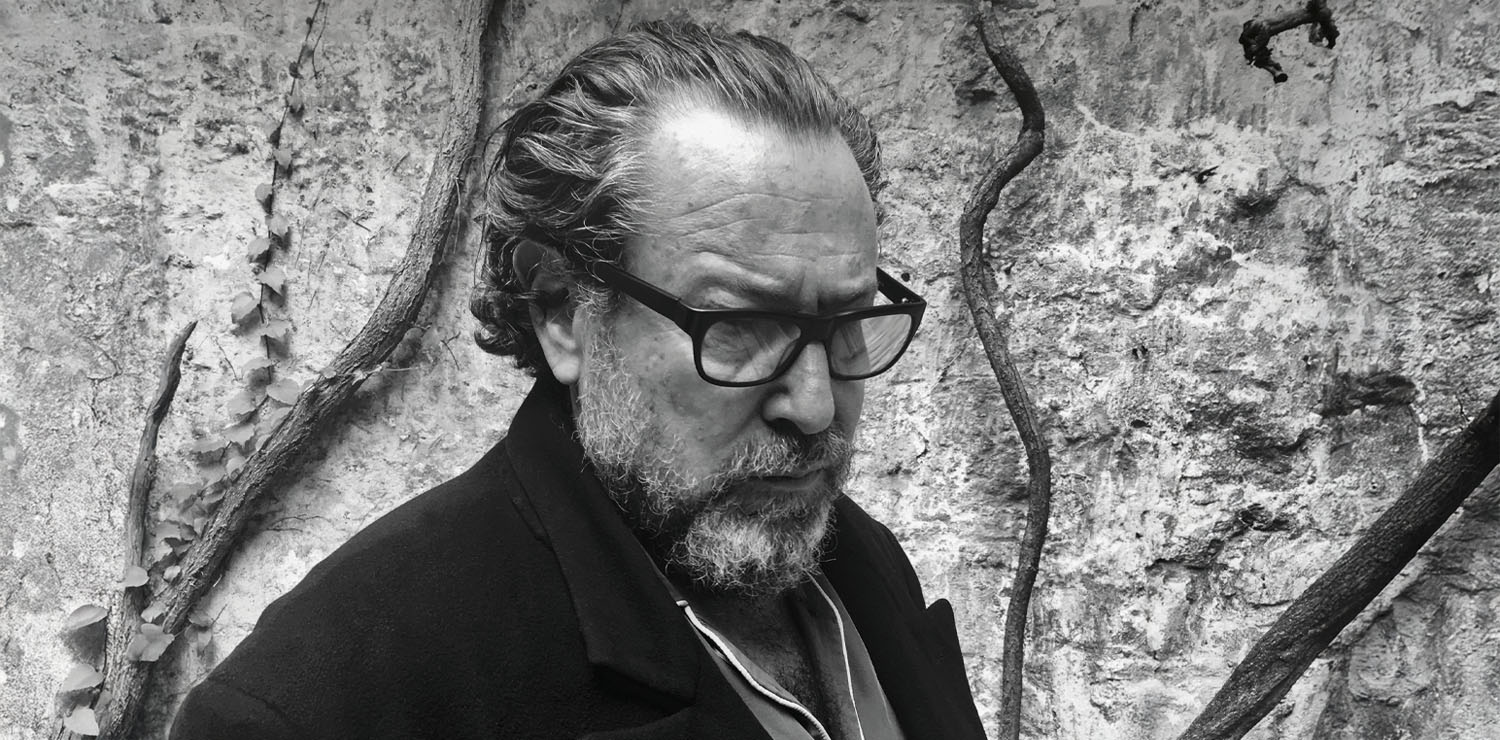
text Marco Voena
photo Sean Thomas



Julian Schnabel and the cinema of extraordinary lives
The American painter and filmmaker is in Florence for the International Antiques Biennale to receive the Lorenzo d’Oro award
For Julian Schnabel, a story, before becoming a film, must have undergone a breaking point. “There is a life that follows its course and then something happens: an encounter, an illness, a discovery, a fall. From that moment on, nothing can ever be the same.” It is in this rift that the American painter and film director finds the beginning of his stories, the human material even before the cinematic one. He is not so much interested in reconstructing a character’s existence as in allowing the viewer to inhabit it, even if only for the duration of a film. This has happened with Jean-Michel Basquiat, with the Cuban writer Reinaldo Arenas in Before Night Falls, with Jean-Dominique Bauby in The Diving Bell and the Butterfly, and with Vincent van Gogh. Artists, writers, men forced into extreme conditions: different personalities, united by a moment capable of forever altering the course of their lives. Around each of them a society forms, friendships, conflicts and relationships emerge. But at the center there is always a solitary person, observed in the transition between what they were before and what they would become afterward.
“There is always something that changes a person’s life for a reason”, the director recounts in this conversation with his friend and art dealer Marco Voena on the occasion of the Florence International Antiques Biennale, for the awarding of the Lorenzo d’Oro. Schnabel also received the lifetime achievement award for his extraordinary work as a director and his latest film, The Hand of Dante, at the Lucca Film Festival.
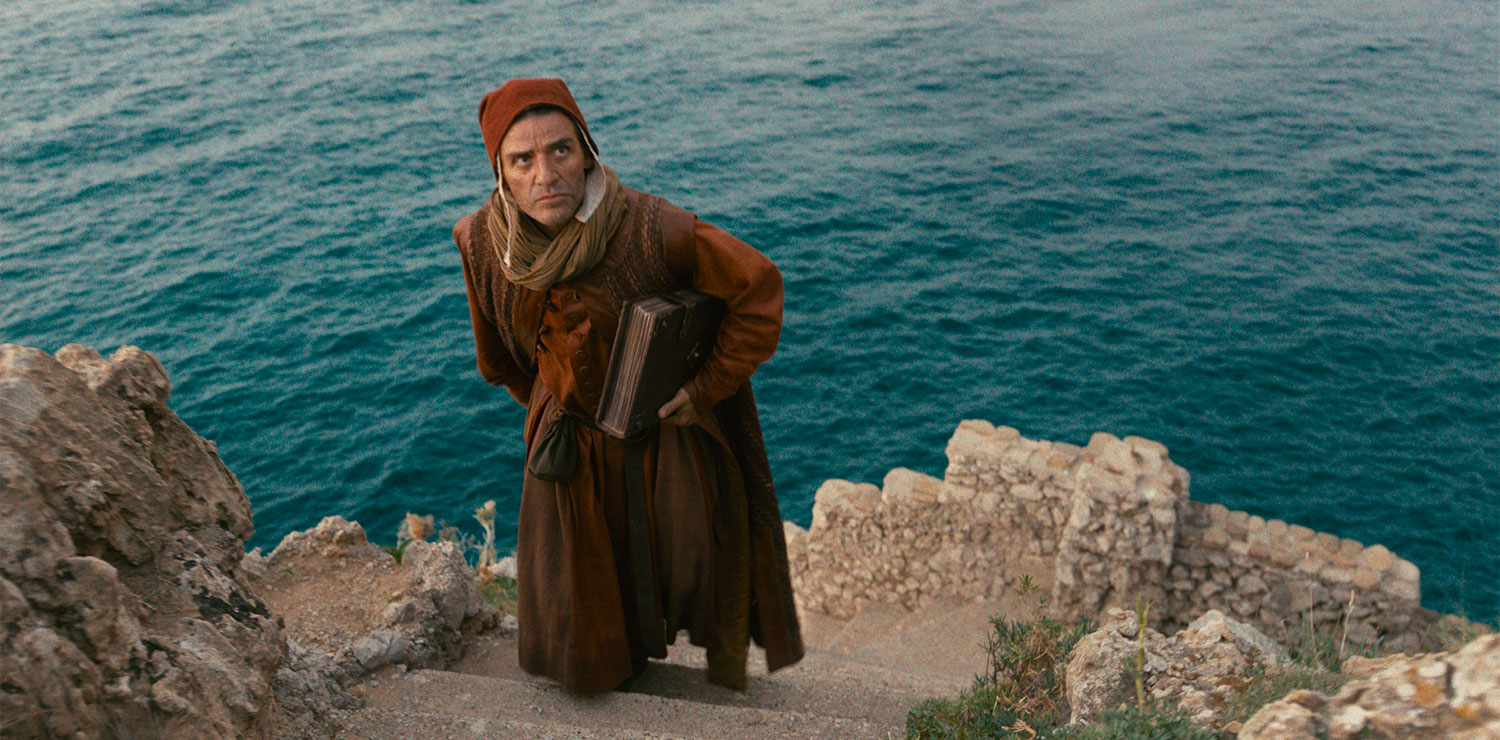
 Julian Schnabel’s film In the Hand of Dante was presented in Venice last year
Marco Voena. Your stories are always told in the first person. Instead of you being told a story, you experience what the protagonists are going through. Rather than a film about Van Gogh, it is a film in which you can be Van Gogh...
Julian Schnabel. Exactly. In On the Threshold of Eternity, the camera indeed follows the painter, taking on his instability, his breathing, his restlessness. It does not observe from a reassuring distance: it enters his field of vision. The viewer does not simply watch the artist paint, but is led into a perception of the world in which light, nature and color acquire an almost physical intensity. The same principle applies to The Diving Bell and the Butterfly, inspired by the story of Jean-Dominique Bauby. Here as well, I avoided the external gaze: the protagonist’s condition of paralysis becomes that of the viewer. Cinema thus transforms into a tool to go beyond the surface of things and to convey, at least in part, the inaccessible experience of another human being.
MV. I remember the first time I heard you speak about cinema and art…
JS. They are very similar. A painting always leads you into its present. If you look at a Caravaggio today, that work enters the 21st century and stays there with you. The sensation it produces surpasses language. Something similar happens in filmmaking. Every completed scene is a painting, even if it is born out of the collaboration with actors, the director of photography, costume designers and everyone who works on the film. I do not prepare storyboards: I arrive at a location, look and listen. The best actors are the best listeners, but I believe that the best directors are as well.
MV. Is it also the principle that guides The Hand of Dante?
JS. Yes, it is. In The Hand of Dante I wanted to show that only an eternal present exists. And we are there: at the point where different eras can coexist and Dante, the past and our time are engaged in a continuous dialogue. I am not interested in connecting every point to make everything as simple as possible. Some things happen in space and remain suspended between understanding and observation. They are films made to be watched more than once. This film is a tragicomedy, just like life…
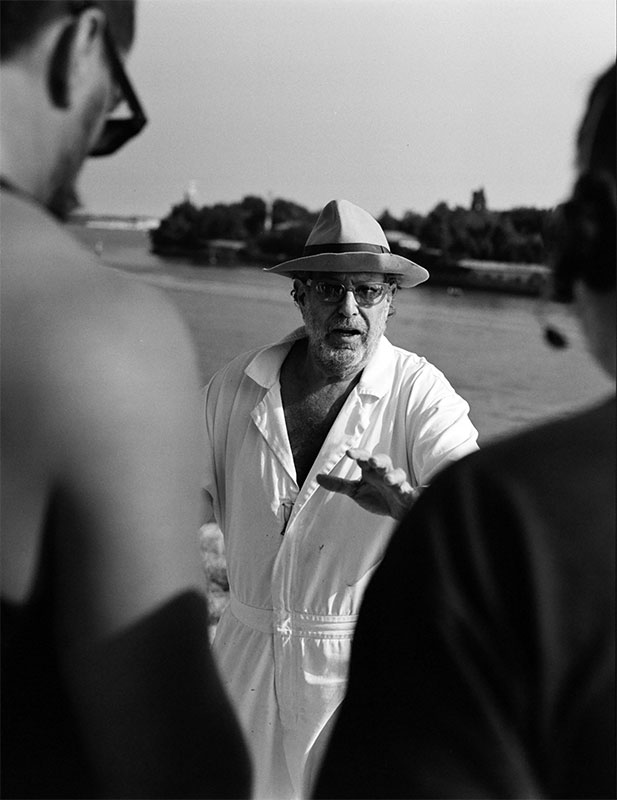
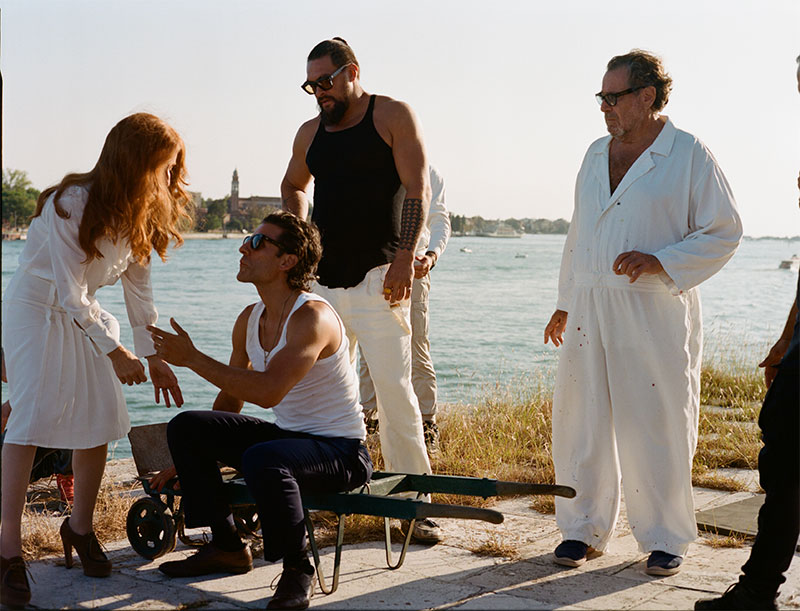 Some photos from the set of In the Hand of Dante, filmed entirely in Italy, between Venice and Sicily
MV. How did you come across Nick Tosches’ book?
JS. Johnny Depp and I had done Before Night Falls together. After that film, he gave me Nick’s book and said to me: “I think there’s a movie in here”. At first, I thought it was impossible, but I could see the possibility of showing how even a life that seems perfect is actually imperfect. It took me seven years to figure out how to do it. But that’s exactly what I liked: the book allowed me to show very different things and to move in different directions. The film compresses time, erases the separation between black and white and color, between 15th-century language and contemporary language.
MV. The film has a really interesting cast: Al Pacino, John Malkovich, Jason Momoa, Franco Nero, Sabrina Impacciatore, Benjamin Clementine (also the music composer). And Martin Scorsese, who plays Isaiah in the film…
JS. Marty has always supported my career. The line that his character says to Dante: “you can lie and go to hell, or tell the truth and be crucified” is something he himself has experienced. There could have been no one else for that role.
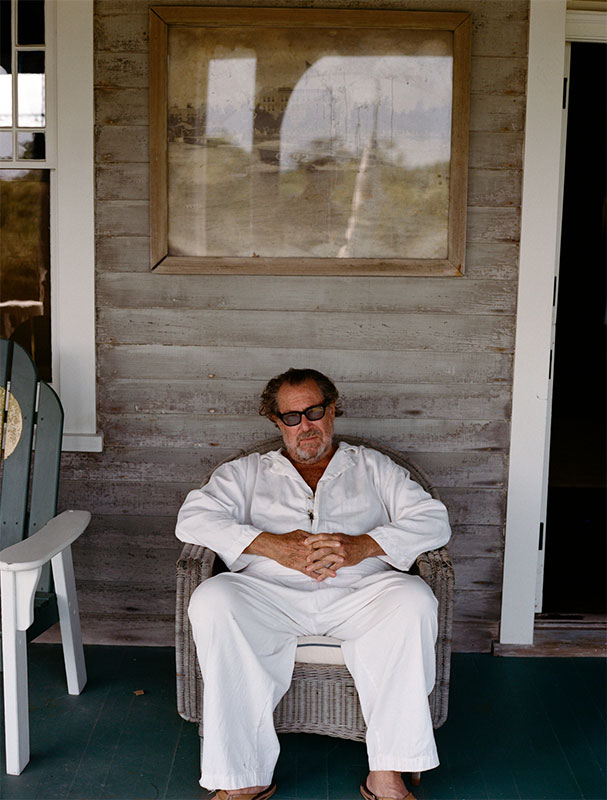 Some photos from the set of In the Hand of Dante, filmed entirely in Italy, between Venice and Sicily
MV. Perhaps I am mistaken, but The Hand also seems to me technically very different from the films you made before.
JS. What interests me is portraying people. The Hand is a portrait of Nick. But also the possibility of bringing the Divine Comedy into the present. In general, what interests me is creating a situation in which something authentic can happen. Sometimes my task is simply to step aside and see what the actors can do. I can open a door, place them in a certain situation and then let them surprise even me. It means having trust in them. Think, for example, of Jason Momoa: you can imagine a thousand things to have a person like him do. But then you put him in a real place and something else happens. Jason is a huge man, yet sometimes he can seem like a child. It is precisely these contradictions that are interesting. In The Hand, many locations were discovered along the way. You encounter places and people almost by chance and, if you know how to listen to them, they become part of the film.