text Matteo Parigi Bini



Roberto and Marco Casamonti: Art, Architecture, and the New Headquarters at Palazzo San Giorgio
Roberto and Marco Casamonti discuss the new space where the Casamonti Collection and the Archea Associati firm come together
The exchange between father and son Roberto and Marco Casamonti is intense and stimulating, shaped by elective affinities and an enduring passion for discovery, novelty and evolution. Their work now comes together in a historic palazzo on Lungarno Cellini which, following an important restoration, is ready to host a new chapter in the family’s story.
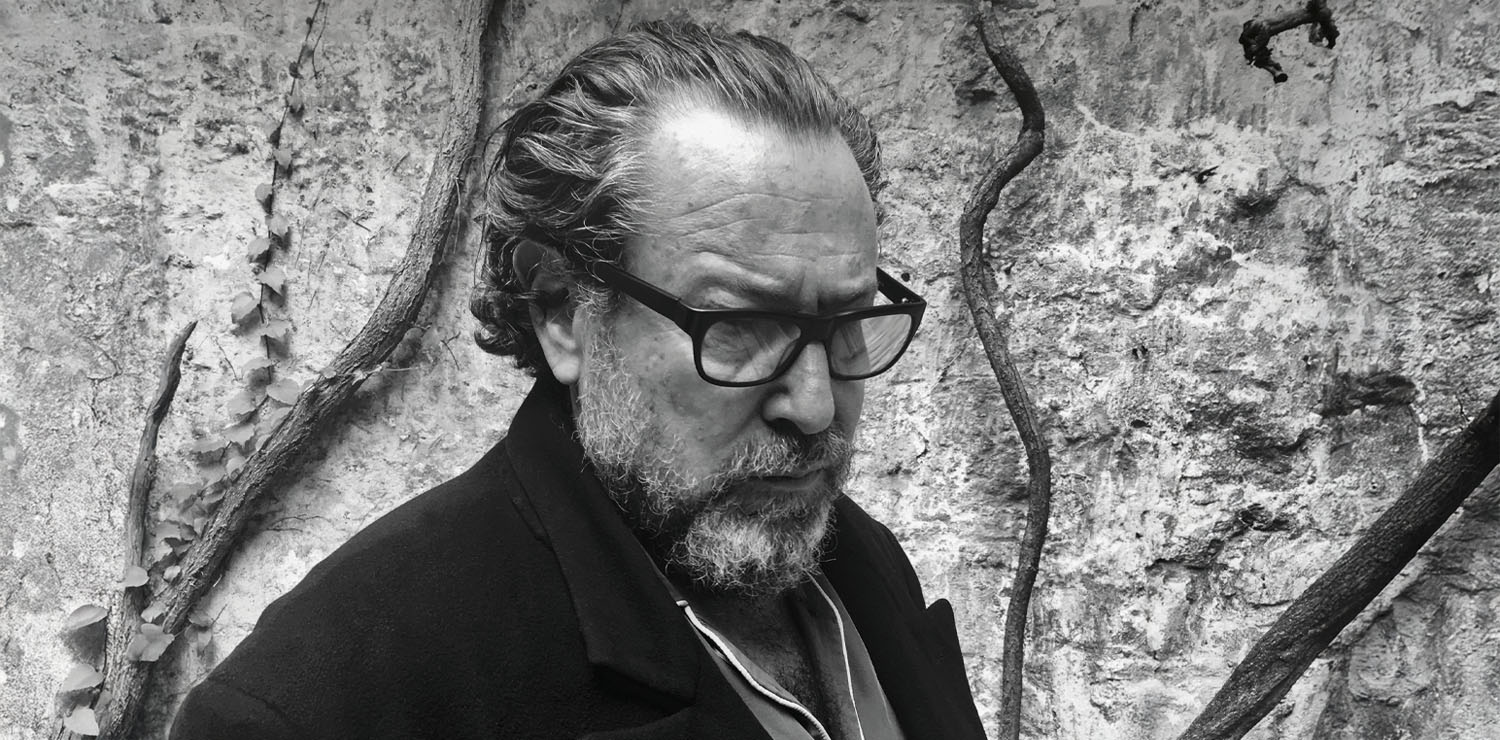
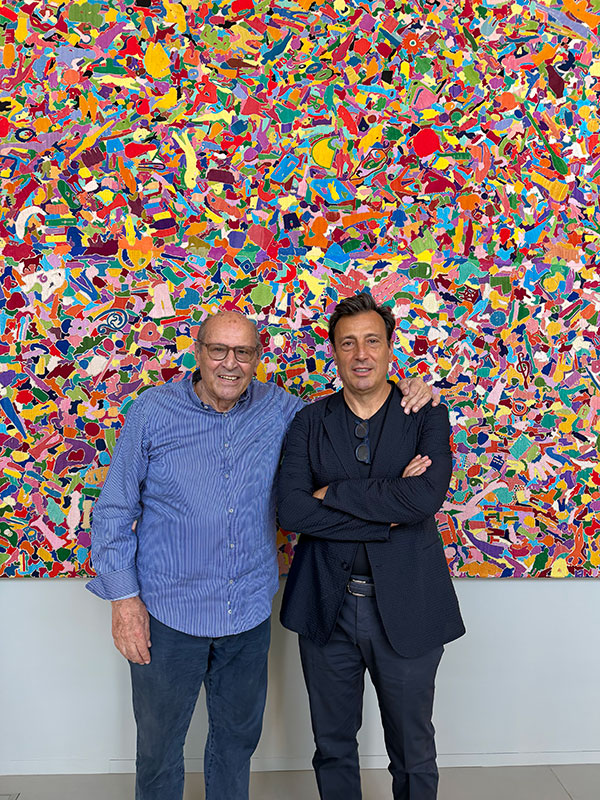 Roberto and Marco Casamonti in front of the work by Alighiero Boetti
Why did you choose Palazzo San Giorgio as the home of the Collezione Casamonti and the architecture practice?
Marco Casamonti The palazzo is close to both my father’s gallery and Archea’s Florence office, bringing together two worlds long connected in our family history. Ever since the days of Via Tornabuoni, art and architecture have coexisted: different expressions of the same creative universe. For many years, whenever we passed along the Lungarno, we saw this building standing empty. When the opportunity arose to acquire it, I immediately saw a way to bring our parallel worlds together. The Collection is a source of inspiration: for my colleagues and me, even simply passing a painting can spark an idea. That is how the decision arose to bring the studio and Collection together under one roof.
What does this building offer compared with the previous home at Palazzo Bartolini Salimbeni?
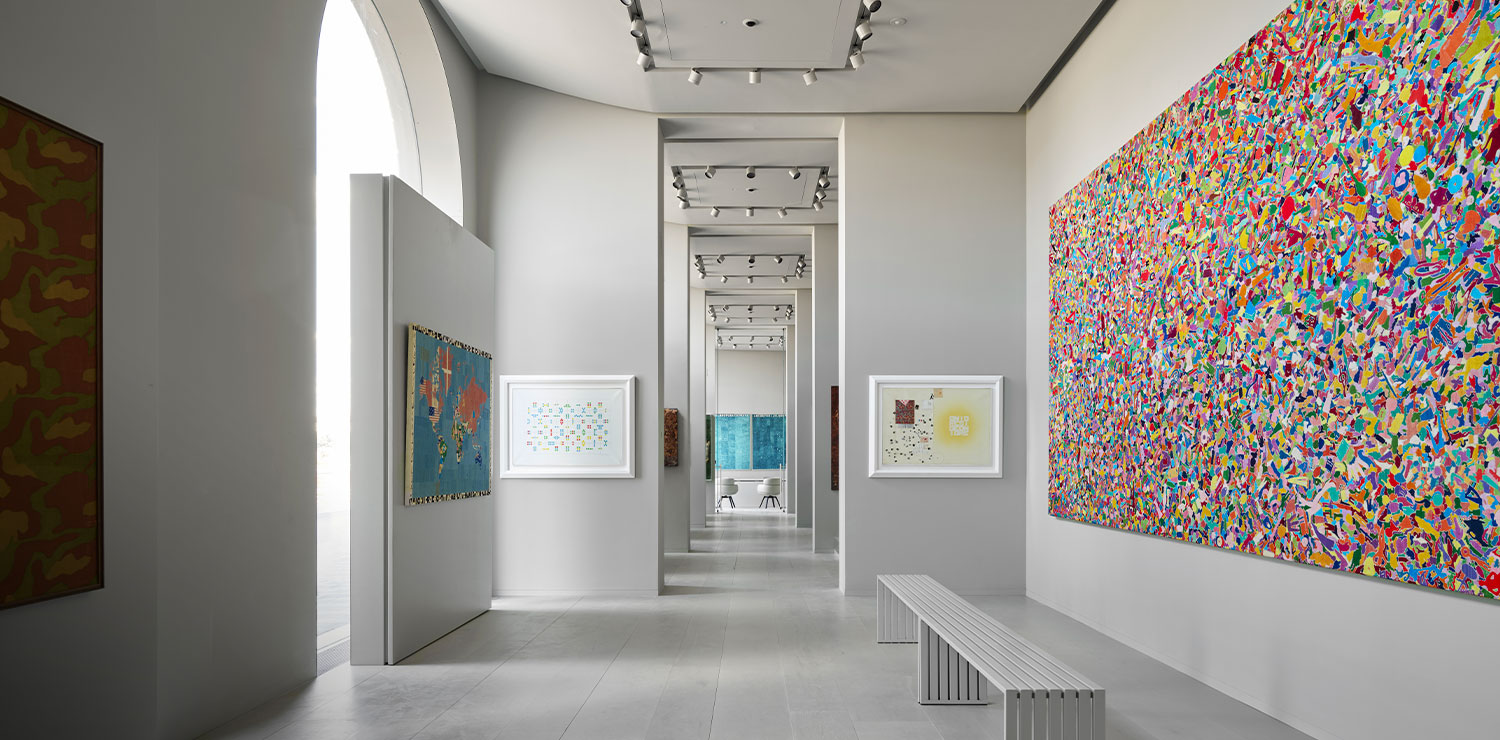
Roberto Casamonti Palazzo Bartolini Salimbeni is a magnificent space, rich in art and history. Palazzo San Giorgio allows a broader, more continuous presentation of the Collection, from the late nineteenth and early twentieth centuries to the great post-war figures. The route includes artists such as Fattori, Chini, Severini, Sironi, Campigli and Carrà, leading on to Fontana and Burri, as well as Basquiat, Warhol and Picasso. It is a more complete, legible and articulated narrative.
The Collezione Casamonti, however, is not presented as something static or definitive…
RC It is a dynamic collection and must remain so. As at Palazzo Bartolini Salimbeni, many things have changed: new works have entered, while others have been replaced. My work has always involved searching, buying, selling and selecting to improve the collection over time. There is no closed, immutable corpus, but a collection in a constant state of becoming. Change is part of its very identity.
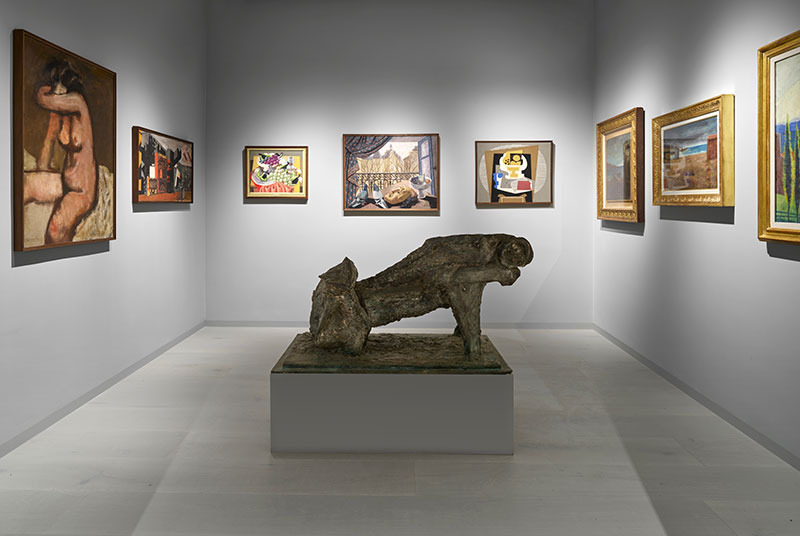 Collezione Casamonti
Marco, you have often said that architecture has its roots in art. Is the reverse also true?
MC Certainly. In the European experience, and particularly in Italy, art and architecture are profoundly intertwined. Think of the Renaissance: architects played a decisive role in the history of art. Brunelleschi and his codification of perspective changed the very way we represent the world.
How important was growing up alongside your father’s collection to your development as an architect?
MC Had my father not collected art, I probably would not have met so many artists or entered this world so early. Studying art is one thing; living among it another. Studying art is one thing; living among it is another. Tuscan architects have, so to speak, ‘compasses in their eyes’, because they grow up surrounded by certain proportions, perspectives and forms. It is not a personal merit, but a privilege.
Roberto, which of Marco’s architectural works best express this dialogue with art?
RC I have to mention the Antinori Winery, his first major turning point, with that emblematic cut through the magnificent Chianti hills. Then there is the Liling Ceramic Museum in China, one of the most extraordinary examples anywhere of “imitative architecture”, where the building’s form closely recalls the objects to which it is devoted. The Tirana Stadium in Albania regenerated part of the city. Viola Park, Fiorentina’s sports centre, is an example of architecture serving both sport and landscape. And, more recently, the theatre in Via de’ Cimatori, an urban regeneration project capable of bringing memory and future together. These are projects in which one clearly senses that Marco was born and raised surrounded by art. Even if he is not fully aware of it, everything he has seen remains in his subconscious and resurfaces in each new project.
How did you approach the architectural restoration of Palazzo San Giorgio?
MC The building originally housed stables, so it was a functional and relatively modest space, without frescoes or major decoration, though it has a very beautiful façade. Its narrow plan is divided into numerous rooms. We wanted to restore its original coherence, removing the subdivisions and alterations accumulated over time. Its sequence of rooms is particularly well suited to exhibitions. After all, the corridor belongs to the great Florentine museum tradition: one need only think of Palazzo Pitti and the Baroque picture galleries of the Palatina.
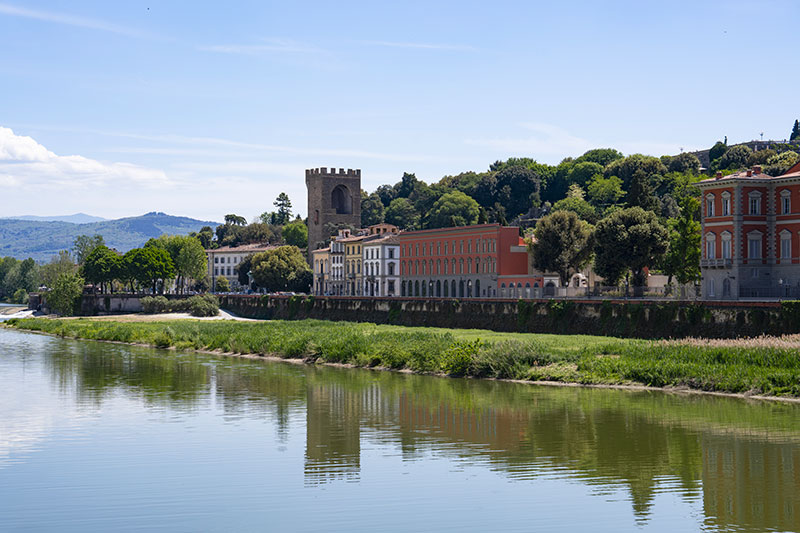 Palazzo San Giorgio
Is this a contemporary version of the Florentine relationship between home and workshop?
MC Exactly. I live above the studio and the Collection. The Florentine idea of the casa-bottega, the house and workshop combined, is renewed here in contemporary form: home, work, art and everyday life once again coexist.
Which works in the Collection do you feel most attached to?
MC The works my father loves most are often those that have most influenced my own work. I think especially of artists of the 1960s, of Spatialism and Arte Povera. Fontana and Boetti, for example, have left an important mark on the way I conceive space. What we experience enters into us and later resurfaces in our work.
Roberto, did you feel first and foremost a collector or an art dealer?
RC Above all, I was an art lover. I began as a boy, listening to the artists who visited my father. I remember dinners with Ottone Rosai at twelve: I stayed silent, listened and absorbed everything. My father introduced me to Soffici and Campigli; I met Vedova, Pomodoro, Chiari and many other leading figures in Italian art.
Do you remember the first important work you bought independently?
RC I was still very young when I bought a tempera by Gianni Dova. I telephoned the artist in Milan and asked whether I could bring it to him to verify its authenticity. When I arrived, he made me wait in his studio because he was working with a model. For a boy my age, that alone was an extraordinary experience. Dova confirmed that the tempera was his. I spontaneously told him how much I loved his oil paintings, and he showed me a beautiful work, Toro in giardino. I did not hesitate: I left him the tempera and paid the difference to buy the painting. Back in Florence, I showed it to my father. He liked it very much. That episode marked the course of my life and my entry into the art world.
When did your love of art finally become a profession?
RC The decisive moment came in 1981, after my father’s death. I had opened the gallery in Via Tornabuoni, and the first year was very difficult. I had no employees and sold very little. At that time I found a small work by Fontana. I liked it and decided to buy it. Some time later an important German collector came into the gallery; he wanted it and told me that if I found others, he would buy those too. The following year I sold him ten or twelve. Innovation is fundamental in art, and Fontana was doing things never seen before: one of his cuts is the quintessence of Spatialism. Pure genius. He captivated me to such an extent that today I am his largest collector.
You inaugurated the Collection during the Biennale. What relationship can develop between Palazzo San Giorgio and events such as BIAF?
MC The Florence International Antiques Fair is a top-level exhibition of museum-quality works. It brings thousands of people to the city who are interested in art in all its forms. Palazzo San Giorgio can offer them a continuation of that journey through the twentieth century and into the contemporary.
The Collezione Casamonti ideally begins where other museum narratives leave off and continues through the twentieth century. Every private collection reflects the history and eye of its creator: it makes no claim to be encyclopaedic and can therefore offer a personal, recognisable viewpoint. In the future, also thanks to the Biennale, the Palazzo may become a place of dialogue between ancient and contemporary art. Sometimes a single ancient work is enough to create a connection capable of suggesting a new reading of a contemporary piece.
Will this cross-fertilisation between languages and historical periods therefore be one of the defining characteristics of the project?
MC Yes. These relationships can involve ancient art, architecture, music, cinema or literature. One could, for example, place Neorealist painting in dialogue with cinema from the same period. What matters is that the space remains alive and does not become a passive container. Dynamism is not an accessory: it is an essential condition of the project.
Can the Palazzo also be considered Marco’s tribute to his father?
MC. It is a tribute to my father, but also to our family history. It is a project in which different generations, sensibilities and professions come together: collecting, architecture and, above all, a shared passion for art. It is no coincidence that the Collection now bears our family name.