

Leonardo da Vinci, the genius who came from Florence
From Verrocchio’s workshop to the masterpieces in the Uffizi, to the Mona Lisa and the mysterious Battle of Anghiari: the story of the Renaissance master and his deep connection to Florence.
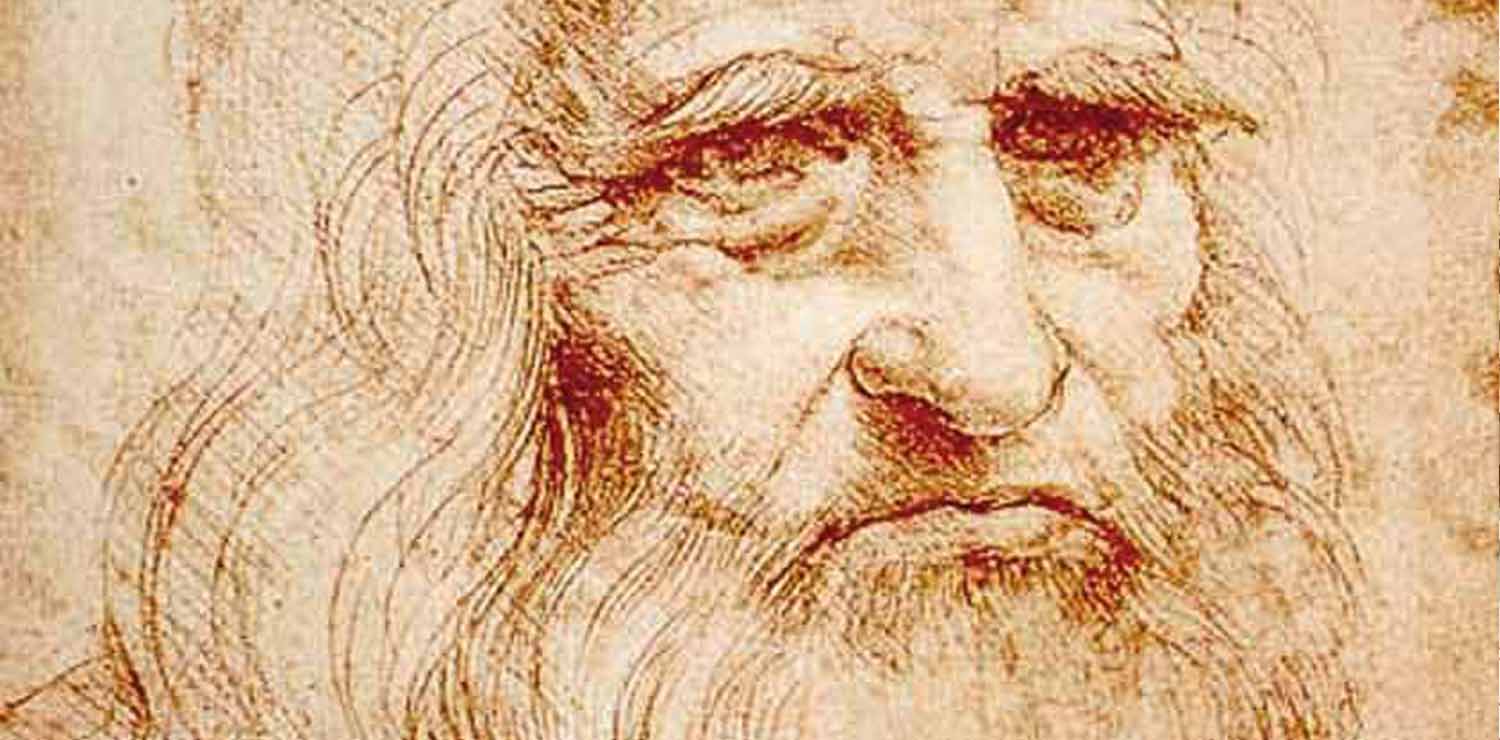
Painter, sculptor, architect, engineer, anatomist, and inventor, Leonardo da Vinci (1452–1519) is considered one of the greatest geniuses in human history, a symbol of that extraordinary cultural era known as the Italian Renaissance.
His boundless curiosity, which spanned art and science, from the study of the human body to the laws of nature, found the ideal environment to flourish in Florence.Born on April 15, 1452, in Anchiano, near Vinci, Leonardo spent part of his childhood in the Tuscan countryside,observing nature and its phenomena with a keen attention that would accompany him throughout his life. While still very young, he moved to Florence, where his father, Ser Piero, worked as a notary.
The family also lived in the area of Via degli Spadai—now Via dei Martelli—just a short walk from the Duomo, in the heart of a city that was experiencing one of its moments of greatest splendor.It was the Florence of the Medici, of Lorenzo the Magnificent, of artists and humanists—a center of culture and experimentation that attracted talent from all over Italy. In this environment, Leonardo began his training in the workshop of Andrea del Verrocchio, one of the most important artistic workshops of the fifteenth century, located in the area of what is now Via de’ Macci. There he learned to draw, paint, sculpt in clay, work with metal, and tackle the challenges of perspective. The workshop was a place where the arts engaged in a constant dialogue with one another and where other leading figures of the Renaissance were also trained, including Sandro Botticelli and Pietro Perugino.
One of the most famous anecdotes recounted by Giorgio Vasari dates back to these very years. While collaborating with Verrocchio on the Baptism of Christ, Leonardo painted the angel on the left with such delicacy and perfection that, according to the biographer, he surpassed even his master.Beyond the anecdote, the painting, now housed in the Uffizi, already attests to his extraordinary ability to capture the softness of faces, the movement of hair, and the effects of light. Florence still preserves some of the most important examples of this early creative period. In Room 35 of the Uffizi Gallery, dedicated to Leonardo, visitors can admire three key works: the Baptism of Christ, the Annunciation, and the Adoration of the Magi. In the Annunciation, painted around 1472, the artist already demonstrates a surprising attention to nature, depicting the flower-filled meadow, the trees, and the landscape fading into the distance with botanical precision. In *The Adoration of the Magi*, commissioned in 1481 for the church of San Donato a Scopeto and left unfinished, his revolutionary ability to create compositions rich in movement and psychological intensity comes to the fore. In 1482, Leonardo left Florence to move to Milan, to the court of Ludovico il Moro, where he remained for many years, putting his talent at the service of the duke as an artist, engineer, and designer of machines and stage sets. It was here that masterpieces such as the Lady with an Ermine, the first version of the Virgin of the Rocks, and the immortal Last Supper—painted in the refectory of the convent of Santa Maria delle Grazie—were created. His connection to Florence, however, was not severed. After the fall of Ludovico il Moro, Leonardo returned to the Tuscan city, where he stayed once again in the early 16th century.It was during this second Florentine period that one of the world’s most famous paintings took shape: the Mona Lisa, generally identified as Lisa Gherardini, wife of the Florentine merchant Francesco del Giocondo. Her enigmatic smile, her gaze that seems to follow the viewer, and the blurred landscape behind her have made it a universal image. Leonardo continued to work on the portrait in the following years, even taking it with him to France. Another great undertaking awaited him at Palazzo Vecchio, where in 1503 he was commissioned to depict the Battle of Anghiari in the Sala del Maggior Consiglio, now known as the Salone dei Cinquecento. Michelangelo, who was working on the Battle of Cascina, was to work on the opposite wall: an extraordinary confrontation between the two greatest figures of the Renaissance. Neither work was ever completed. Of the Battle of Anghiari—famous above all for its dramatic scene of knights fighting over a banner—only studies and indirect accounts remain, while the fate of the mural continues to spark interest and raise questions. Alongside his painting, Leonardo never ceased to devote himself to scientific research. He studied the flight of birds, the movement of water, human anatomy, war machines, architecture, and the laws of mechanics. His insights took shape in drawings accompanied by annotations, often written in his characteristic mirror-image script, from right to left. A significant portion of these sheets is now collected in the famous Codex Atlanticus, preserved in Milan at the Biblioteca Ambrosiana.
After a stay in Rome, in 1516 Leonardo moved to France at the invitation of Francis I, who welcomed him to the royal court and provided him with the manor of Clos Lucé, near the Château d’Amboise. Here he spent the last years of his life, continuing to study and design.He died on May 2, 1519, leaving behind an unprecedented artistic and scientific legacy. More than five centuries after his death, Florence remains one of the key cities for understanding Leonardo’s genius. The galleries of the Uffizi, Palazzo Vecchio, and the streets of the historic center tell the story of the years when a young Tuscan artist transformed his curiosity into a new way of observing the world. This legacy belongs to universal history, yet it is deeply rooted in Florentine culture.