text Sergio Risaliti



Victor Man at the Museo Novecento
From September 26 to March 7, 2027, Florence is hosting a major solo exhibition dedicated to one of the most influential European painters of his generation
When I discovered Victor Man’s paintings twenty-five years ago, I was immediately captivated. It was a time when painting did not enjoy much recognition within the art world. In particular, it seemed that attention had shifted away from the great painting of the 20th century and its masters. These artists were often sidelined by the avant-garde movements and by those who followed the narratives of contemporary art. I’m thinking of Balthus, Lucian Freud, and Morandi. And going even further back, Pontormo or Rembrandt. These artists are part of a Western history and canon from which it seemed necessary to break away.
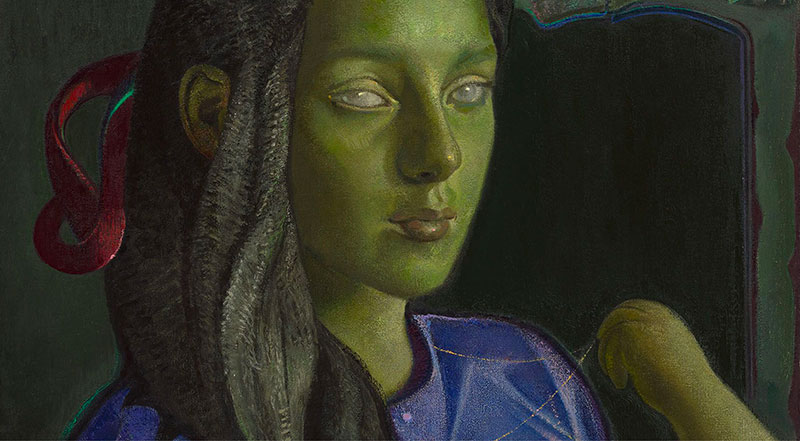 Victor Man, Maternity (Curve Delle Anime), 2025 (© Victor Man. Courtesy the Artist, Galerie Max Hetzler and David Zwirner)
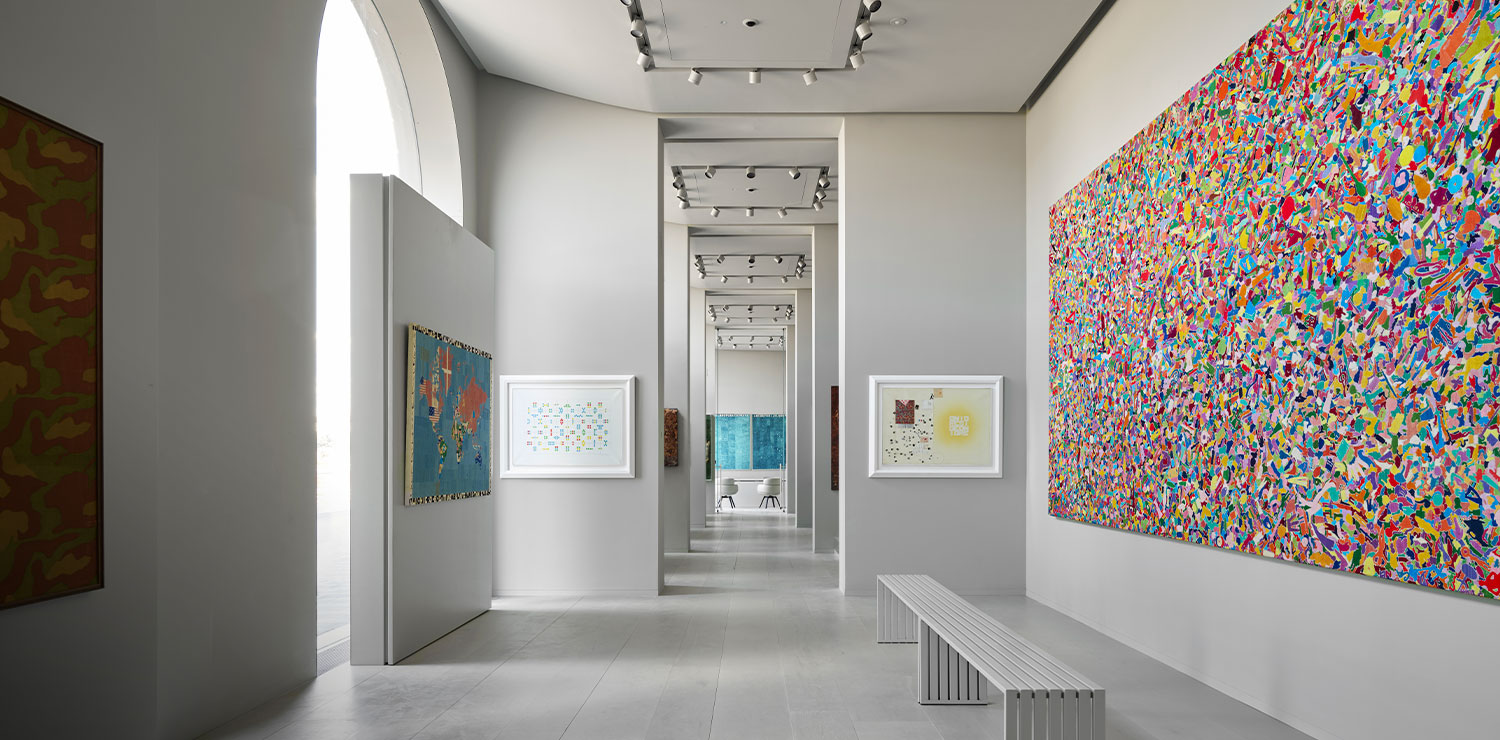
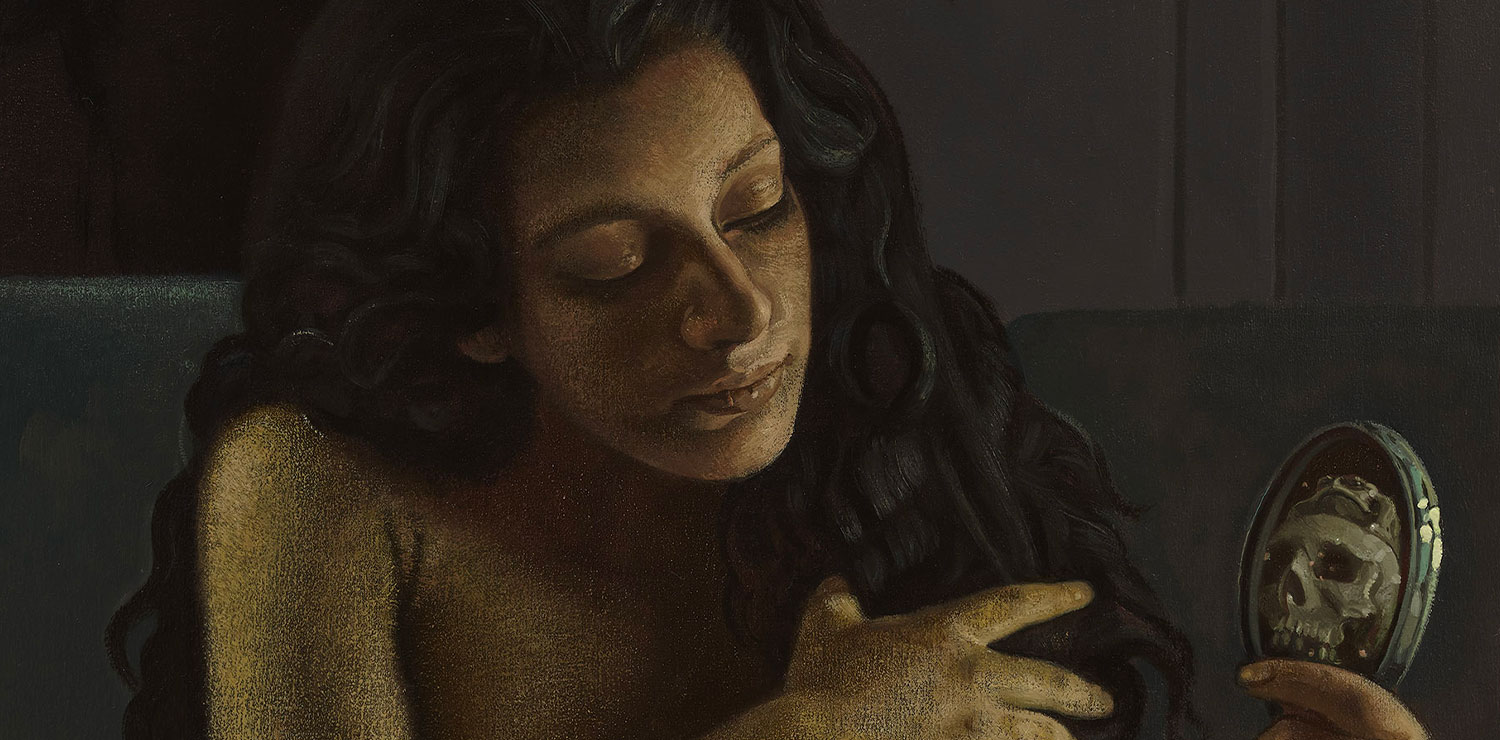
Victor Man chose a completely different path, one that runs “counter to” what is happening today. He grew up in Romania after the fall of communism; he could have been drawn to pop and postmodern styles, but he did the exact opposite: he built his work on a deep connection with the history of painting. Yet he never turned this connection into allusion, imitation, or a stylistic exercise. It is precisely this distance from referential art that, in my opinion, makes his work so important and firmly rooted in art history nonetheless. It was Enzo Cucchi who first told me about Victor Man. Later, I had the opportunity to encounter his works on several occasions, culminating in the exhibition at the Fondazione Sandretto Re Rebaudengo in Turin. I was almost mesmerized by his portraits. Something profound emanates from those paintings: a somber luminosity, almost minute details, suspended gazes – nothing seemed to correspond to what I saw around me in other exhibitions and among contemporary artists. And yet, I sensed a sort of familiarity. A Familienähnlichkeit, as Wittgenstein would have said. Not a similarity to be sought out, but an underlying continuity that runs through the history of images and painterly sensibility. With Man, we are not dealing with a layering of references to be recognized. His work is not the archaeology of images. Certain elements – a skull, a moth, a mirror, a nude – appear as visual residues originating from a place we cannot fully reconstruct. They are images that have lost their original context and, precisely for this reason, possess a new potential; Man’s painting springs from history but frees itself from all precedents through originality. For this reason, I consider his work profoundly modern, even though it defies many of the categories we use to define the contemporary. In an age in which we are subjected to a continuous flow of images – thanks to virtual imagery, social media, artificial intelligence, and digital devices – Man compels us to slow down the pace of our gaze: his paintings demand silence and a contemplative disposition. The exhibition at the Museo Novecento features twenty-five paintings, including self-portraits, depictions of motherhood, portraits, and female nudes, still lifes, and works in which the relationship with the tradition of painting is particularly evident. It is a selection that offers a basic overview of his work: on the one hand, the celebration of life; on the other, the obsession with death. It is a tension that runs through the human experience and which, in painting, perhaps finds its only means of being held together.
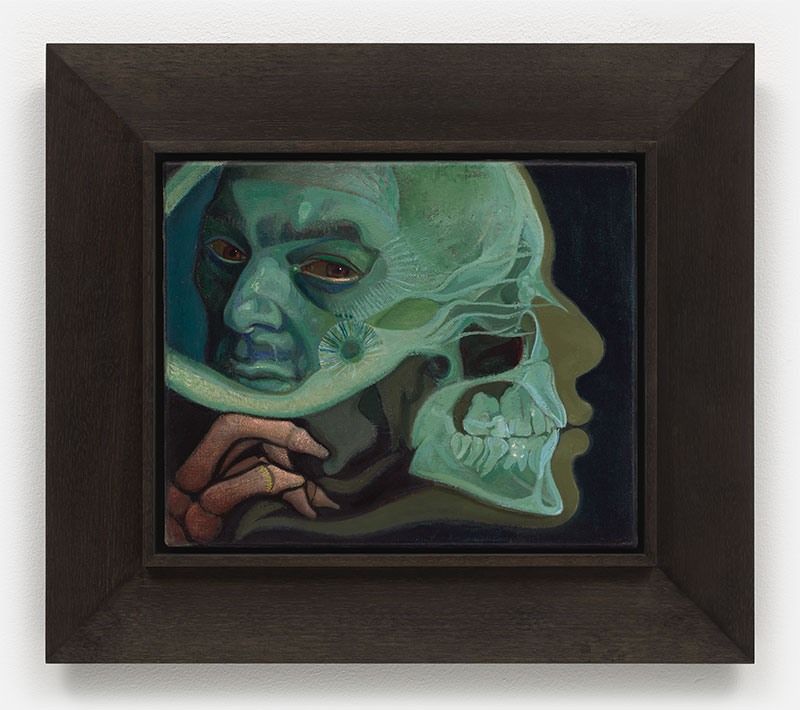 Victor Man, Umbra Vitae, 2024 - 2025
Man’s light is not a light that simply illuminates, but one that arises from color and from the very substance of the painting itself. Even black, in her paintings, can emanate light – a luminosity that does not erase the darkness but seems to emanate from it. In some works from the Luminary Petals series, for example, scenes evoking flagellations and images reminiscent of ancient painting are immersed in a dark substance that both veils and reveals what lies deep within. Looking at them requires the eyes to adjust to the darkness. When faced with his paintings, it seems insufficient to me to use the usual words. Enigmatic, spectral, metaphysical, mysterious: these are definitions that come close, but ultimately become clichés. The core of Man’s painting continues to elude us because it tackles unresolvable questions such as birth, motherhood, childhood, the fragility of life, the unconscious, death, the desire for eternity, and our relationship with the transcendent. It is here that painting demonstrates its necessity. It is not mechanical reproduction; it is not an image to be consumed; it cannot be replaced by technology. Painting is matter, physicality, presence. It is one of the few experiences in which a human being can still confront the inscrutable and the mystery of existence. Victor Man argues that one cannot truly speak of painting, because no language is capable of describing it fully. I agree with him. As Stefan Zweig wrote, the conception of a work of art remains shrouded in darkness, like the birth of the world: an elusive, almost divine phenomenon, a mystery that we can reconstruct only in hindsight. I hope that visitors will return to the Museo Novecento and feel the desire to view these works one at a time, head-on, without rushing. And that they may return the next time having almost forgotten what they had already seen, so as to let themselves be surprised anew. There is, however, one image I would like to recall: in the museum’s chapel, Victor chose to display a drawing made by his daughter. It is not one of his own works, and precisely for this reason it seems important to me. It allows us to start from the beginning – from childhood as the original season of creativity, from that age when one is unaware of the inevitability of death. Perhaps that is where we must begin again to understand Victor Man’s painting: from wonder, from mystery, and from the need to give form to what we cannot explain – the mystery of Life and its ‘sister’, Death.